
Spider
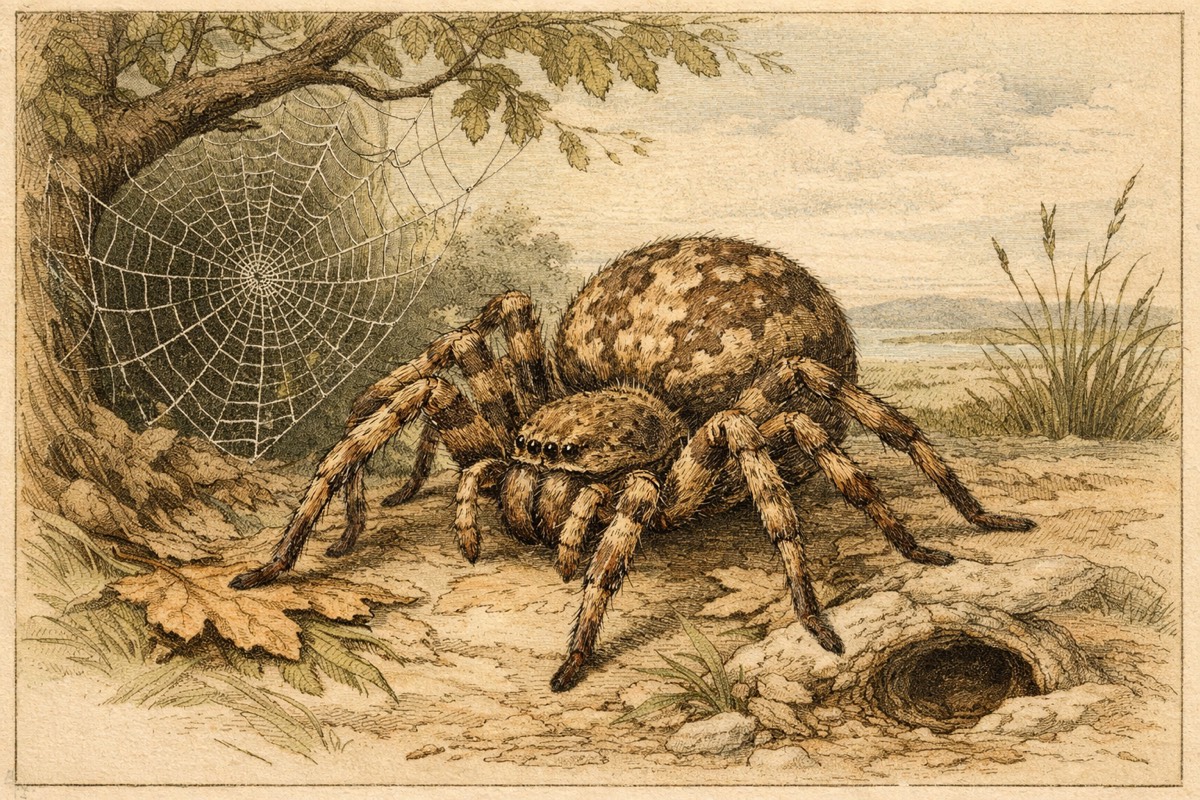
Spiders are arachnids known for silk, eight legs, varied hunting styles, and major roles in controlling insect populations.
Spiders live in forests, grasslands, deserts, caves, houses, and wetlands. Spiders occur worldwide in almost every terrestrial habitat. Silk production gives spiders many options for hunting, shelter, egg protection, and travel. Spiders are major insect predators in nearly all land ecosystems.
Most spiders are solitary. Activity varies by species, with many hunting at night or during quiet periods. Habitat change and pesticide use can reduce spider diversity.
Quick Facts
| Scientific name | Order Araneae |
|---|---|
| Animal type | Arachnid |
| Diet | Carnivore |
| Habitat | Forests, grasslands, deserts, caves, houses, and wetlands |
| Lifespan | Often 1 to 3 years, though some live longer |
| Weight | Usually very light and species-dependent |
| Length or height | From tiny species to large tarantulas |
| Top speed | Varies from still ambushers to very fast runners |
| Conservation status | Varies by species |
Field Notes
60 notes and observations for quick reference.
- Scientifically, spiders are placed under Order Araneae.
- They belong to the arachnid group.
- Their diet can be described as carnivore.
- They are most closely associated with forests, grasslands, deserts, caves, houses, and wetlands.
- Life span is often 1 to 3 years, though some live longer.
- Adult weight is usually very light and species-dependent.
- Body size ranges from tiny species to large tarantulas.
- Movement is usually varies from still ambushers to very fast runners.
- Their conservation status is currently listed as varies by species.
- Spiders occur worldwide in almost every terrestrial habitat.
- Most spiders are solitary.
- Activity varies by species, with many hunting at night or during quiet periods.
- Spiders do not usually form permanent groups, though a few social species exist.
- Young spiders are called spiderlings.
- Eggs are usually enclosed in silk sacs for protection.
- Spiders walk on eight legs, and some jump or run with great speed and control.
- They use webs, ambush, pursuit, or jumping attacks depending on species.
- Insects and other small invertebrates are the main prey.
- Touch, vibration sensing, and vision all matter, but importance varies by species.
- Vibration, chemical cues, and body posture are important in courtship and defense.
- Venom, camouflage, speed, silk retreats, and threat displays help spiders survive.
- Silk production gives spiders many options for hunting, shelter, egg protection, and travel.
- Spiders depend on habitat quality, food supply, and safe breeding conditions to keep populations stable.
- Climate, food supply, and safe habitat all shape how successfully spiders can survive and reproduce.
- Spiders are major insect predators in nearly all land ecosystems.
- Habitat change and pesticide use can reduce spider diversity.
- Spiders live in climates from deserts to rainforests, provided they can find shelter and prey.
- Spiders have two main body sections rather than three like insects.
- They have eight legs and no antennae.
- Silk is produced by spinnerets at the rear of the abdomen.
- Many spiders have multiple simple eyes arranged in species-specific patterns.
- Venom is usually delivered through fangs called chelicerae.
- Web-building spiders need suitable anchor points and airflow conditions.
- Ground spiders use leaf litter, stones, or burrows as cover.
- Jumping spiders often prefer sunny surfaces where vision works well.
- Even small gardens or house corners can support spider life if prey is available.
- Web design differs widely, from orb webs to funnel webs to sheet webs.
- Jumping spiders rely heavily on vision and stalking behavior.
- Some spiders wait in one place for prey, while others roam constantly.
- Courtship can be complex because males must avoid being mistaken for prey.
- Many species repair or rebuild webs regularly.
- Spiders usually feed by liquefying the internal tissues of prey.
- Venom mainly helps subdue insects rather than defend against large animals.
- A spider's diet can shift with season and prey availability.
- Large females often take larger prey than smaller males of the same species.
- Spiderlings may disperse by ballooning on silk threads in some species.
- Molting is necessary for growth because the outer skeleton does not stretch.
- Egg sacs protect developing young from drying and predators.
- The earliest life stages often depend on tiny prey and sheltered microhabitats.
- Because spiders reduce insect numbers, they are valuable natural pest controllers.
- Messy corners, leaf litter, and plant structure often support more spider diversity than highly simplified spaces.
- Heavy pesticide use can remove both prey and spiders themselves.
- Public fear of spiders often hides how useful and diverse they really are.
- Spider silk can be stronger than many people expect for such a light material.
- Not all spiders build prey-catching webs.
- A jumping spider can judge distance with impressive accuracy.
- Some tiny spiderlings travel surprisingly far by ballooning on air currents.
- A web is not just a trap; it can also act like an extension of the spider's senses.
- Spiders show how many hunting solutions can evolve within one animal order.
- Their importance in controlling insects is far greater than their size suggests.
Habitat and Range
Spiders are linked to forests, grasslands, deserts, caves, houses, and wetlands. Spiders occur worldwide in almost every terrestrial habitat. Web-building spiders need suitable anchor points and airflow conditions. Ground spiders use leaf litter, stones, or burrows as cover.
Behavior and Lifestyle
Most spiders are solitary. Activity varies by species, with many hunting at night or during quiet periods. Web design differs widely, from orb webs to funnel webs to sheet webs. Jumping spiders rely heavily on vision and stalking behavior.
Diet and Feeding
Their diet is carnivore. They use webs, ambush, pursuit, or jumping attacks depending on species. Insects and other small invertebrates are the main prey. Spiders usually feed by liquefying the internal tissues of prey.
Conservation and Adaptations
Silk production gives spiders many options for hunting, shelter, egg protection, and travel. Habitat change and pesticide use can reduce spider diversity. Because spiders reduce insect numbers, they are valuable natural pest controllers. Spiders are major insect predators in nearly all land ecosystems.