
Bee
Bees are pollinating insects whose relationship with flowers supports wild ecosystems, crops, and biodiversity.
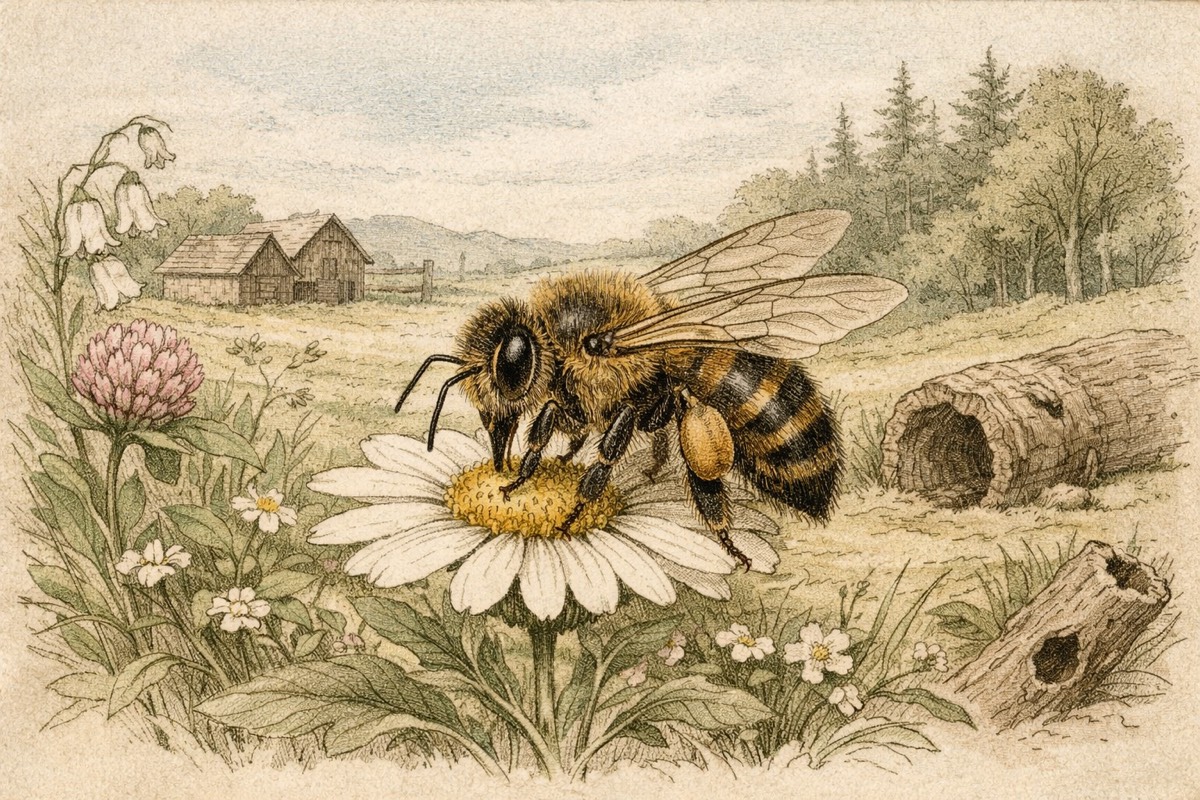
Bees live in meadows, forests, farms, gardens, and many other flowering habitats. Bees occur on every continent except Antarctica. Body hair and pollen-carrying structures make bees efficient pollinators. Bees pollinate a huge range of wild plants and crops.
Some bees are highly social, while many species live alone. Most bees are active by day when flowers are open and temperatures are suitable. Habitat loss, pesticides, disease, parasites, and climate stress threaten many bees.
Quick Facts
| Scientific name | Clade Anthophila |
|---|---|
| Animal type | Insect |
| Diet | Herbivore, feeding on nectar and pollen |
| Habitat | Meadows, forests, farms, gardens, and many other flowering habitats |
| Lifespan | Varies greatly by species and caste |
| Weight | Small and species-dependent |
| Length or height | From tiny solitary bees to large bumblebees and carpenter bees |
| Top speed | Fast, direct flight between flowers and nest sites |
| Conservation status | Varies by species, with many declines recorded |
Field Notes
60 notes and observations for quick reference.
- Scientifically, bees are placed under Clade Anthophila.
- They belong to the insect group.
- Their diet can be described as herbivore, feeding on nectar and pollen.
- They are most closely associated with meadows, forests, farms, gardens, and many other flowering habitats.
- Lifespan varies greatly by species and caste.
- Adult weight is small and species-dependent.
- Body size ranges from tiny solitary bees to large bumblebees and carpenter bees.
- Movement is usually fast, direct flight between flowers and nest sites.
- Their conservation status is currently listed as varies by species, with many declines recorded.
- Bees occur on every continent except Antarctica.
- Some bees are highly social, while many species live alone.
- Most bees are active by day when flowers are open and temperatures are suitable.
- Honey bees live in colonies, while many other bees are solitary.
- Young bees develop as larvae inside cells or chambers.
- Females lay eggs in nests supplied with pollen and nectar or in managed colony combs.
- Wings beat rapidly for agile flower-to-flower flight.
- Bees collect nectar for energy and pollen for protein.
- Bees do not hunt prey; flowering plants are their main food resource.
- Sight, smell, and sensitivity to ultraviolet flower patterns help bees find food.
- Communication varies by species and can include pheromones, dances, and vibration.
- Stings, warning behavior, nest guarding, and quick flight defend some bees.
- Body hair and pollen-carrying structures make bees efficient pollinators.
- Bees depend on habitat quality, food supply, and safe breeding conditions to keep populations stable.
- Climate, food supply, and safe habitat all shape how successfully bees can survive and reproduce.
- Bees pollinate a huge range of wild plants and crops.
- Habitat loss, pesticides, disease, parasites, and climate stress threaten many bees.
- Bee activity depends strongly on flowering season, temperature, and weather.
- Branching body hairs help pollen stick to the body.
- Many bees carry pollen in baskets or brushes on the legs or abdomen.
- Compound eyes detect movement and flower color, including ultraviolet patterns.
- The tongue length differs between species and affects which flowers they can use.
- Body size influences flight range and pollination behavior.
- Bees need nesting sites as well as flowers.
- Some species nest in the ground, while others use hollow stems or wood.
- Continuous bloom across the season is important for colony or offspring success.
- Flower-rich field margins and native plantings greatly improve habitat quality.
- Honey bees can share food source information through waggle dances.
- Bumblebees can warm their flight muscles by shivering.
- Solitary bees often provision each nest cell with enough food for one larva.
- Many bees show flower constancy and keep visiting the same plant type during one trip.
- Weather strongly influences when bees leave the nest to forage.
- Nectar mainly provides sugars for energy.
- Pollen provides protein and other nutrients needed for developing young.
- Some flowers are visited mostly by specialist bees adapted to them.
- A rich diversity of plants usually supports a richer bee community.
- Bee larvae usually develop in enclosed cells or chambers with stored food.
- Queens and workers can differ greatly in lifespan within social species.
- Seasonal cycles determine when new queens, males, or workers are produced.
- Many solitary bees survive winter or dry seasons in dormant immature stages.
- Pollinator-friendly habitat needs nesting places, clean forage, and reduced pesticide risk.
- Native bee conservation is just as important as managed honey bee health.
- Wildflower diversity supports bees over longer parts of the year.
- Protecting bees helps maintain plant reproduction across whole landscapes.
- A bee can see ultraviolet patterns on flowers that people cannot see.
- Buzz pollination allows some bees to shake loose pollen from certain flowers.
- Many bee species never make honey for human use.
- Even small gardens can help bees when they offer diverse blooming plants.
- The world of bees is far more diverse than the single image of a hive suggests.
- Bees make plant reproduction visible by turning flight paths into pollination routes.
- Their ecological value is much larger than their tiny size suggests.
Habitat and Range
Bees are linked to meadows, forests, farms, gardens, and many other flowering habitats. Bees occur on every continent except Antarctica. Bees need nesting sites as well as flowers. Some species nest in the ground, while others use hollow stems or wood.
Behavior and Lifestyle
Some bees are highly social, while many species live alone. Most bees are active by day when flowers are open and temperatures are suitable. Honey bees can share food source information through waggle dances. Bumblebees can warm their flight muscles by shivering.
Diet and Feeding
Their diet is herbivore, feeding on nectar and pollen. Bees collect nectar for energy and pollen for protein. Bees do not hunt prey; flowering plants are their main food resource. Nectar mainly provides sugars for energy.
Conservation and Adaptations
Body hair and pollen-carrying structures make bees efficient pollinators. Habitat loss, pesticides, disease, parasites, and climate stress threaten many bees. Pollinator-friendly habitat needs nesting places, clean forage, and reduced pesticide risk. Bees pollinate a huge range of wild plants and crops.