
Butterfly
Butterflies are colorful insects whose complete metamorphosis, scaled wings, and plant relationships make them classic nature-study animals.
Butterflies live in meadows, forests, gardens, wetlands, and grasslands. Butterflies occur on every continent except Antarctica. Complete metamorphosis separates the feeding role of the caterpillar from the reproductive role of the adult. Butterflies pollinate flowers and act as food for many other animals.
Butterflies are mostly solitary, though some gather around food, mud, or migration routes. Most butterflies are active during the day. Habitat loss, pesticides, climate change, and host plant decline threaten many species.
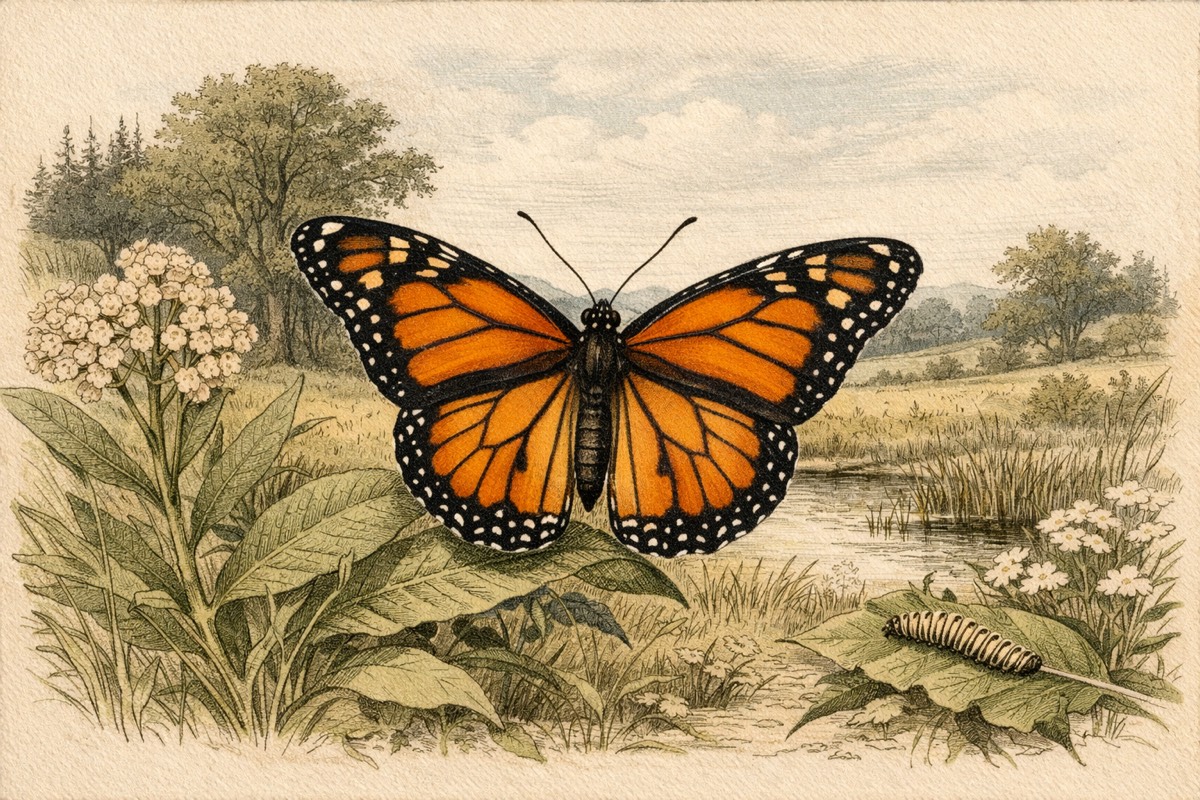
Quick Facts
| Scientific name | Order Lepidoptera |
|---|---|
| Animal type | Insect |
| Diet | Mostly herbivore as caterpillars and nectar feeder as adults |
| Habitat | Meadows, forests, gardens, wetlands, and grasslands |
| Lifespan | Usually weeks as adults, though the full life cycle is longer |
| Weight | Very light-bodied |
| Length or height | Wingspan varies from tiny species to more than 25 cm |
| Top speed | Light, fluttering flight with species-specific variation |
| Conservation status | Varies by species |
Field Notes
60 notes and observations for quick reference.
- Scientifically, butterflies are placed under Order Lepidoptera.
- They belong to the insect group.
- Their diet can be described as mostly herbivore as caterpillars and nectar feeder as adults.
- They are most closely associated with meadows, forests, gardens, wetlands, and grasslands.
- Life span is usually weeks as adults, though the full life cycle is longer.
- Adults commonly weigh very light-bodied.
- Typical size is wingspan varies from tiny species to more than 25 cm.
- Movement is usually light, fluttering flight with species-specific variation.
- Their conservation status is currently listed as varies by species.
- Butterflies occur on every continent except Antarctica.
- Butterflies are mostly solitary, though some gather around food, mud, or migration routes.
- Most butterflies are active during the day.
- A group of butterflies may be called a flutter.
- Young butterflies are caterpillars or larvae.
- Females lay eggs on or near host plants that caterpillars can eat.
- Adults move by flight, while caterpillars crawl using many small gripping legs.
- Adults often sip nectar, while caterpillars feed directly on plant tissue.
- Butterflies do not hunt prey; caterpillars and adults feed on plants or plant-derived resources.
- Vision, scent, and taste receptors on the feet and antennae help butterflies find food and host plants.
- Color, pattern, pheromones, and flight behavior help butterflies find mates and avoid predators.
- Camouflage, warning colors, mimicry, and rapid flight can all provide defense.
- Complete metamorphosis separates the feeding role of the caterpillar from the reproductive role of the adult.
- Butterflies depend on habitat quality, food supply, and safe breeding conditions to keep populations stable.
- Climate, food supply, and safe habitat all shape how successfully butterflies can survive and reproduce.
- Butterflies pollinate flowers and act as food for many other animals.
- Habitat loss, pesticides, climate change, and host plant decline threaten many species.
- Warm, sunny conditions support activity, but different species adapt to different climates.
- Butterfly wings are covered with tiny overlapping scales.
- Bright colors may reflect pigments, microscopic structures, or both.
- A coiled proboscis is used for sipping nectar.
- Antennae help detect scent and movement.
- Caterpillars look very different from the winged adults they become.
- Butterflies need more than flowers; they also need host plants for caterpillars.
- Open sunny patches are important because butterflies rely on external warmth for activity.
- Wet mud or damp ground may attract butterflies seeking minerals.
- Landscape fragmentation can isolate populations even when gardens still contain flowers.
- Basking with open wings helps some species warm up for flight.
- Courtship often includes species-specific flight patterns.
- Migration occurs in a few famous species and covers huge distances.
- Some butterflies defend small territories rich in nectar or sun.
- Adults may roost under leaves or stems during bad weather.
- Many adult butterflies prefer nectar from certain flower shapes.
- Caterpillars can be highly specialized to one host plant or plant family.
- Some adults also take minerals from mud, fruit, or animal dung.
- Plant chemistry can influence both caterpillar survival and adult coloration.
- Butterflies develop through egg, larva, pupa, and adult stages.
- The chrysalis is the stage in which major transformation occurs.
- Caterpillars often molt several times as they grow.
- Season and climate can determine whether a butterfly develops quickly or enters dormancy.
- Wildflower meadows and native plantings are valuable for butterfly conservation.
- Reducing pesticide use helps both butterflies and many other insects.
- Monitoring butterflies can reveal broader changes in landscape health.
- Protecting migration corridors matters for species that travel long distances.
- A butterfly can taste with sensors on its feet.
- The caterpillar stage is usually the main growing stage of the life cycle.
- Some species mimic toxic butterflies to discourage predators.
- Colorful wings can aid mate choice, warning, or camouflage depending on the species.
- Migration in some butterflies spans multiple generations.
- A garden can look suitable for butterflies yet still fail without the right host plants.
- Butterflies make plant relationships visible in a way many insects do not.
Habitat and Range
Butterflies are linked to meadows, forests, gardens, wetlands, and grasslands. Butterflies occur on every continent except Antarctica. Butterflies need more than flowers; they also need host plants for caterpillars. Open sunny patches are important because butterflies rely on external warmth for activity.
Behavior and Lifestyle
Butterflies are mostly solitary, though some gather around food, mud, or migration routes. Most butterflies are active during the day. Basking with open wings helps some species warm up for flight. Courtship often includes species-specific flight patterns.
Diet and Feeding
Their diet is mostly herbivore as caterpillars and nectar feeder as adults. Adults often sip nectar, while caterpillars feed directly on plant tissue. Butterflies do not hunt prey; caterpillars and adults feed on plants or plant-derived resources. Many adult butterflies prefer nectar from certain flower shapes.
Conservation and Adaptations
Complete metamorphosis separates the feeding role of the caterpillar from the reproductive role of the adult. Habitat loss, pesticides, climate change, and host plant decline threaten many species. Wildflower meadows and native plantings are valuable for butterfly conservation. Butterflies pollinate flowers and act as food for many other animals.