
Frog
Frogs are amphibians whose life cycles, moist skin, vocal breeding calls, and jumping legs tie them closely to water and climate.
Frogs live in ponds, wetlands, forests, streams, grasslands, and tropical canopies depending on species. Frogs live on every continent except Antarctica. Permeable skin and dual life stages link frogs closely to water availability and air quality. Frogs help control insects and provide food for fish, birds, reptiles, and mammals.
Most frogs are solitary outside breeding gatherings. Many frogs are most active at night or in wet weather. Habitat loss, pollution, disease, invasive species, and climate change threaten frogs worldwide.
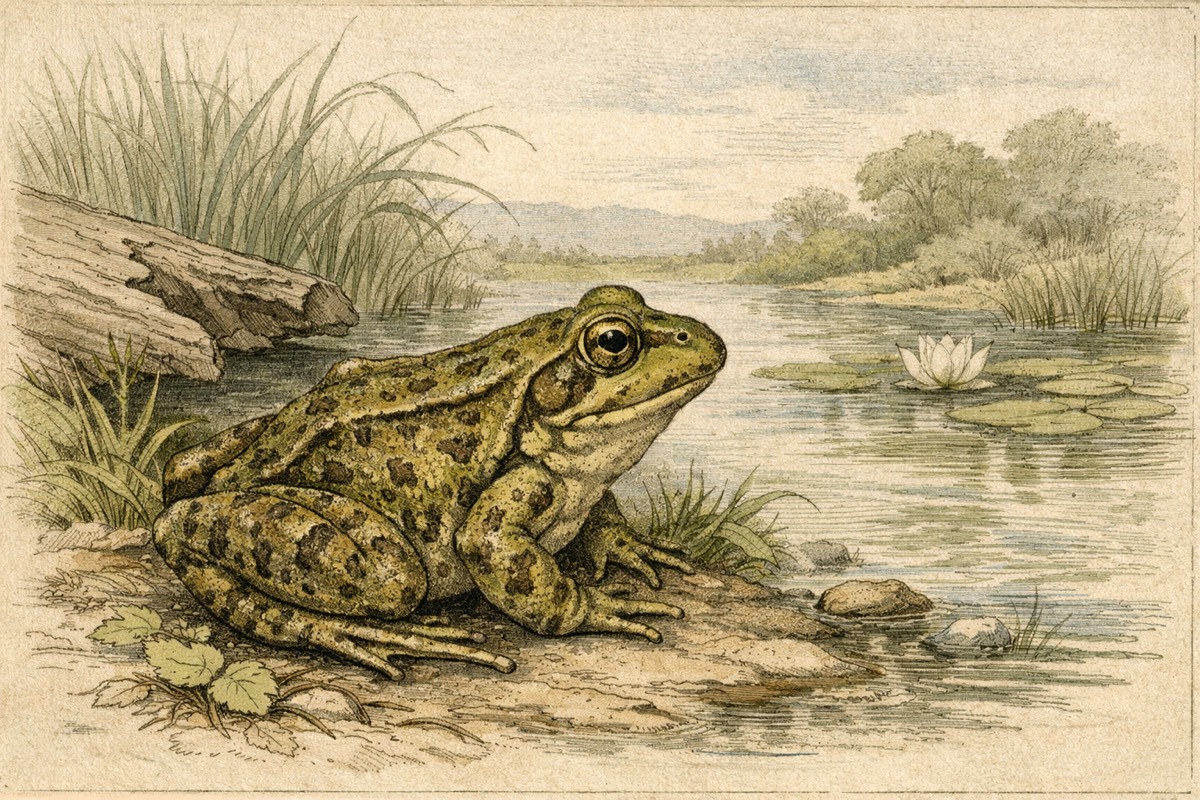
Quick Facts
| Scientific name | Order Anura |
|---|---|
| Animal type | Amphibian |
| Diet | Carnivore |
| Habitat | Ponds, wetlands, forests, streams, grasslands, and tropical canopies depending on species |
| Lifespan | Varies widely by species |
| Weight | From tiny fractions of a gram to more than 3 kg |
| Length or height | From under 1 cm to more than 30 cm depending on species |
| Top speed | Quick jumps and short swimming bursts |
| Conservation status | Many species are threatened |
Field Notes
60 notes and observations for quick reference.
- Scientifically, frogs are placed under Order Anura.
- They belong to the amphibian group.
- Their diet can be described as carnivore.
- They are most closely associated with ponds, wetlands, forests, streams, grasslands, and tropical canopies depending on species.
- Lifespan varies widely by species.
- Adult weight ranges from tiny fractions of a gram to more than 3 kg.
- Body size ranges from under 1 cm to more than 30 cm depending on species.
- Movement is usually quick jumps and short swimming bursts.
- Their conservation status is currently listed as many species are threatened.
- Frogs live on every continent except Antarctica.
- Most frogs are solitary outside breeding gatherings.
- Many frogs are most active at night or in wet weather.
- Frogs do not form permanent social groups, though many gather during breeding.
- Young frogs begin life as tadpoles.
- Most frogs lay eggs in water or moist places where tadpoles can develop.
- Long hind legs support jumping, and many species also swim well.
- Frogs usually wait or creep close before snapping prey with the tongue.
- Insects and other small invertebrates form most frog diets, though large species may take small vertebrates.
- Vision is important for movement detection, and many frogs are highly sensitive to vibration and moisture.
- Calls are especially important during breeding and territory defense.
- Camouflage, jumping, toxic skin secretions, and hiding in moisture-rich cover help frogs survive.
- Permeable skin and dual life stages link frogs closely to water availability and air quality.
- Frogs depend on habitat quality, food supply, and safe breeding conditions to keep populations stable.
- Climate, food supply, and safe habitat all shape how successfully frogs can survive and reproduce.
- Frogs help control insects and provide food for fish, birds, reptiles, and mammals.
- Habitat loss, pollution, disease, invasive species, and climate change threaten frogs worldwide.
- Moisture and temperature strongly affect where frogs can survive and breed.
- Frogs do not have tails as adults.
- Their skin can absorb water and gases, which helps respiration in some species.
- Long hind legs are adapted for leaping or swimming.
- Bulging eyes provide a wide field of view.
- Toe pads in tree frogs help them grip smooth surfaces.
- Many frogs depend on clean freshwater for breeding.
- Forest leaf litter provides shelter for small terrestrial species.
- Temporary pools can be important because they often hold fewer fish predators.
- Humidity matters because frogs lose water through the skin.
- Male frogs often call repeatedly to attract mates.
- Breeding activity may begin suddenly after rain.
- Some frogs guard eggs or carry young in unusual ways.
- Many species stay hidden by day to reduce dehydration and predation.
- Color and posture can change slightly with temperature, light, or stress.
- A sticky tongue helps capture moving prey quickly.
- Smaller frogs often eat ants, flies, and beetles.
- Larger frogs may swallow prey almost whole.
- Prey abundance in wet seasons can greatly boost growth and breeding success.
- Metamorphosis transforms tadpoles into air-breathing adults with legs.
- Tadpoles often feed very differently from adults.
- Eggs can dry out easily if breeding sites lose water too soon.
- Survival through early life stages is often low, so frogs usually produce many eggs.
- Frogs are important indicators of environmental health because of their sensitive skin and life cycle.
- The chytrid fungus has caused severe declines in some regions.
- Wetland restoration can help frog populations recover.
- Reducing pollution and preserving breeding ponds benefits many species at once.
- A chorus of frogs can turn a quiet wetland into a loud nighttime habitat.
- Some tree frogs can climb glass-like surfaces using specialized toe pads.
- Bright colors may warn predators that a frog is toxic.
- Not all frogs live near permanent water, but most still need moisture at key stages.
- The tadpole-to-frog transformation is one of the clearest life-cycle changes in animals.
- Frog calls are often the easiest way to detect species that remain hidden in vegetation.
- Frogs show how closely amphibians are tied to both land and water.
Habitat and Range
Frogs are linked to ponds, wetlands, forests, streams, grasslands, and tropical canopies depending on species. Frogs live on every continent except Antarctica. Many frogs depend on clean freshwater for breeding. Forest leaf litter provides shelter for small terrestrial species.
Behavior and Lifestyle
Most frogs are solitary outside breeding gatherings. Many frogs are most active at night or in wet weather. Male frogs often call repeatedly to attract mates. Breeding activity may begin suddenly after rain.
Diet and Feeding
Their diet is carnivore. Frogs usually wait or creep close before snapping prey with the tongue. Insects and other small invertebrates form most frog diets, though large species may take small vertebrates. A sticky tongue helps capture moving prey quickly.
Conservation and Adaptations
Permeable skin and dual life stages link frogs closely to water availability and air quality. Habitat loss, pollution, disease, invasive species, and climate change threaten frogs worldwide. Frogs are important indicators of environmental health because of their sensitive skin and life cycle. Frogs help control insects and provide food for fish, birds, reptiles, and mammals.