
Penguin
Penguins are flightless seabirds whose wings evolved into flippers for diving, swimming, and life in marine colonies.
Penguins live in southern ocean coasts, islands, and cold to temperate marine waters. Penguins live in the Southern Hemisphere, from Antarctic ice to temperate islands and coasts. Flipper-like wings and a streamlined body make penguins expert divers. Penguins are important mid-level predators in Southern Hemisphere marine food webs.
Many penguins breed in colonies, sometimes in very large numbers. They are active by day or around feeding opportunity, with much time spent at sea. Climate change, food shifts, pollution, fisheries overlap, and introduced predators threaten some species.
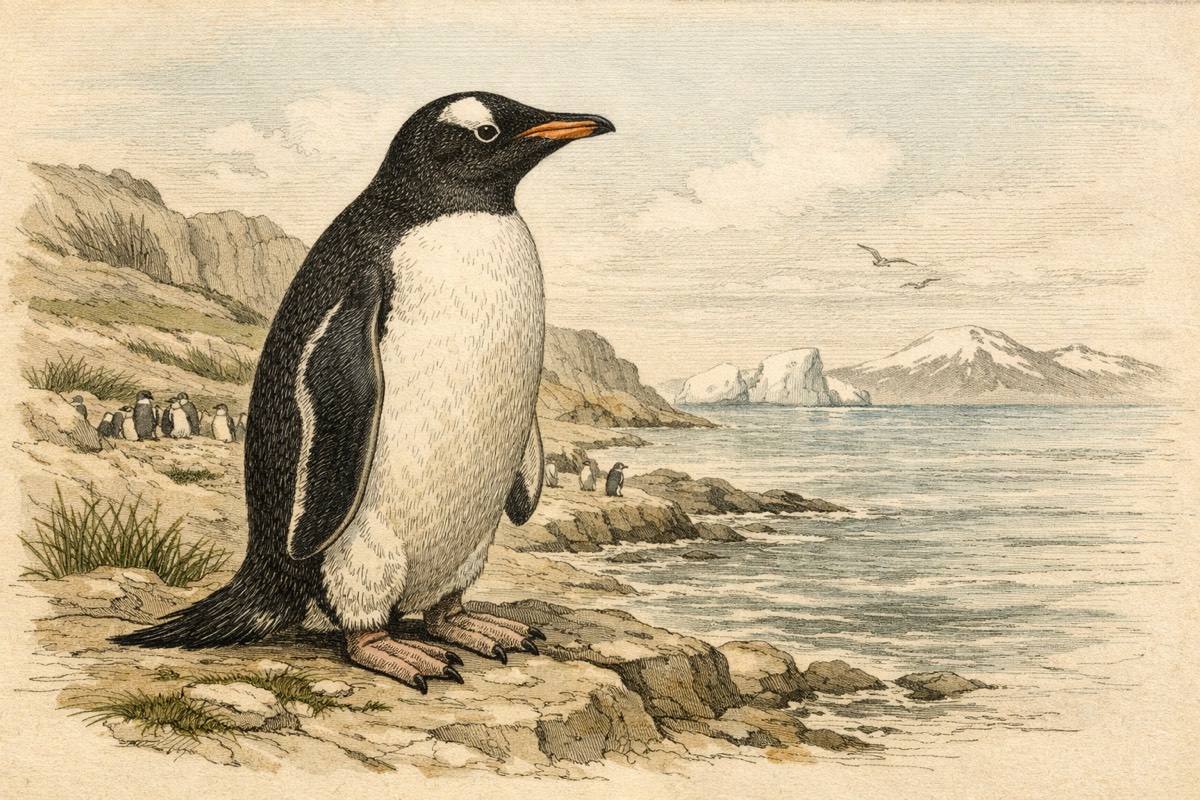
Quick Facts
| Scientific name | Order Sphenisciformes |
|---|---|
| Animal type | Bird |
| Diet | Carnivore |
| Habitat | Southern Ocean coasts, islands, and cold to temperate marine waters |
| Lifespan | Often 10 to 20 years depending on species |
| Weight | About 1 to more than 35 kg depending on species |
| Length or height | From about 30 cm to over 1 meter tall depending on species |
| Top speed | Fast underwater swimmers |
| Conservation status | Varies by species |
Field Notes
60 notes and observations for quick reference.
- Scientifically, penguins are placed under Order Sphenisciformes.
- They belong to the bird group.
- Their diet can be described as carnivore.
- They are most closely associated with southern ocean coasts, islands, and cold to temperate marine waters.
- Life span is often 10 to 20 years depending on species.
- Adults commonly weigh about 1 to more than 35 kg depending on species.
- Body size ranges from about 30 cm to over 1 meter tall depending on species.
- Movement is usually fast underwater swimmers.
- Their conservation status is currently listed as varies by species.
- Penguins live in the Southern Hemisphere, from Antarctic ice to temperate islands and coasts.
- Many penguins breed in colonies, sometimes in very large numbers.
- They are active by day or around feeding opportunity, with much time spent at sea.
- A group of penguins on land is often called a colony, and in water a raft.
- Young penguins are called chicks.
- Penguins lay eggs on land or ice and often share incubation or chick care between parents.
- They waddle on land but are highly efficient swimmers underwater.
- Penguins chase prey underwater using vision and flipper-powered propulsion.
- Fish, krill, and squid are common foods depending on species.
- Good underwater vision is essential for catching prey.
- Calls, display postures, and recognition of mates or chicks are central in colonies.
- Dense colonies, agility in water, and coloration help reduce predation risk.
- Flipper-like wings and a streamlined body make penguins expert divers.
- Penguins depend on habitat quality, food supply, and safe breeding conditions to keep populations stable.
- Climate, food supply, and safe habitat all shape how successfully penguins can survive and reproduce.
- Penguins are important mid-level predators in Southern Hemisphere marine food webs.
- Climate change, food shifts, pollution, fisheries overlap, and introduced predators threaten some species.
- Different species live in icy polar climates, cool subantarctic islands, or temperate shores.
- Penguin wings evolved into flippers and are no longer used for flight in air.
- Dense waterproof feathers help keep cold water away from the skin.
- Countershading makes penguins dark above and light below.
- A layer of fat helps insulate many species in cold seas.
- Feet are set far back on the body, which aids swimming but changes how they walk.
- Breeding habitat may include rocky shores, burrows, beaches, or sea ice.
- At-sea feeding grounds can be far from the colony.
- Cold, productive waters rich in fish or krill are especially important.
- Changes in sea ice and ocean temperature can reshape penguin distribution.
- Many penguins return to familiar breeding sites year after year.
- Parents may take turns between incubating eggs and feeding at sea.
- Penguins often gather closely in harsh weather to conserve heat.
- Chicks in some species form groups while adults forage.
- Underwater, penguins can be swift, agile, and highly efficient hunters.
- Small schooling fish are important prey for many species.
- Krill is especially important in colder Southern Ocean systems.
- Diving depth depends on species, prey, and ocean conditions.
- Feeding success at sea strongly influences breeding success on land.
- Eggs and chicks are vulnerable to weather and predators on land.
- Some species raise only one chick successfully even if two eggs are laid.
- Young penguins must grow waterproof plumage before becoming independent at sea.
- Life at a colony involves both social recognition and intense competition for space.
- Because penguins depend on both land and sea, conservation must protect both.
- Introduced predators such as cats or rats can devastate island colonies.
- Fisheries management matters where penguins and people target the same food resources.
- Long-term monitoring reveals how climate shifts affect breeding and survival.
- A penguin looks awkward on land but highly streamlined underwater.
- Colonies can be noisy because each bird must recognize mates and chicks.
- Some penguins slide on their bellies over snow to save energy.
- The emperor penguin is famous for breeding in the Antarctic winter.
- Not all penguins live on ice; some species breed in much milder climates.
- A single species can divide its time between crowded colonies and vast open ocean.
- Penguins show how bird evolution can trade aerial flight for marine excellence.
Habitat and Range
Penguins are linked to southern ocean coasts, islands, and cold to temperate marine waters. Penguins live in the Southern Hemisphere, from Antarctic ice to temperate islands and coasts. Breeding habitat may include rocky shores, burrows, beaches, or sea ice. At-sea feeding grounds can be far from the colony.
Behavior and Lifestyle
Many penguins breed in colonies, sometimes in very large numbers. They are active by day or around feeding opportunity, with much time spent at sea. Many penguins return to familiar breeding sites year after year. Parents may take turns between incubating eggs and feeding at sea.
Diet and Feeding
Their diet is carnivore. Penguins chase prey underwater using vision and flipper-powered propulsion. Fish, krill, and squid are common foods depending on species. Small schooling fish are important prey for many species.
Conservation and Adaptations
Flipper-like wings and a streamlined body make penguins expert divers. Climate change, food shifts, pollution, fisheries overlap, and introduced predators threaten some species. Because penguins depend on both land and sea, conservation must protect both. Penguins are important mid-level predators in Southern Hemisphere marine food webs.