
Eagle
Eagles are powerful birds of prey with sharp vision, broad wings, hooked beaks, and strong talons.
Eagles live in mountains, forests, coasts, wetlands, and open country. Eagles occur on every continent except Antarctica. Powerful grasping feet and excellent eyesight are central eagle adaptations. Eagles are top avian predators and scavengers in many ecosystems.
Most eagles are solitary or live in pairs during breeding. They are mainly active by day. Habitat loss, poisoning, collisions, and disturbance at nests threaten some populations.
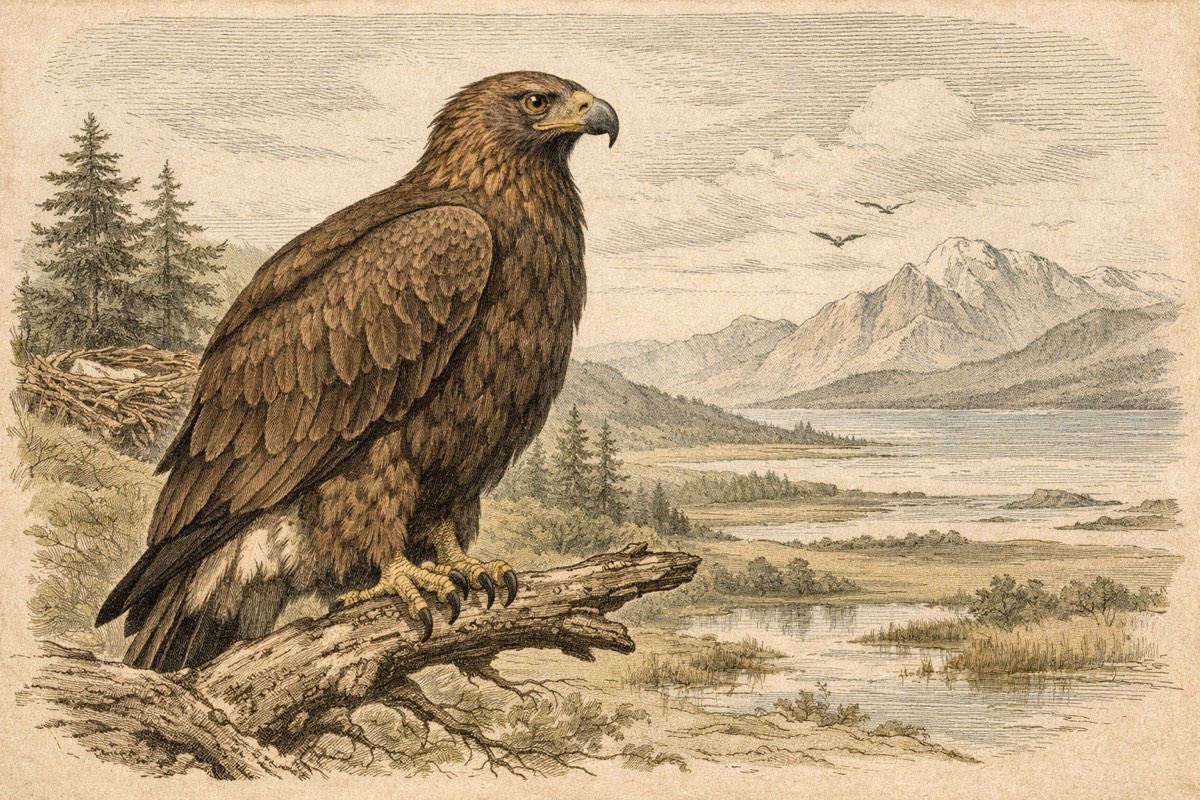
Quick Facts
| Scientific name | Various species in family Accipitridae |
|---|---|
| Animal type | Bird |
| Diet | Carnivore |
| Habitat | Mountains, forests, coasts, wetlands, and open country |
| Lifespan | Often 15 to 30 years depending on species |
| Weight | About 1 to 7 kg depending on species |
| Length or height | Wingspans can exceed 2 meters in large species |
| Top speed | Fast soaring and diving, with some species exceeding 150 km/h in a dive |
| Conservation status | Varies by species |
Field Notes
60 notes and observations for quick reference.
- Scientifically, eagles are placed under Various species in family Accipitridae.
- They belong to the bird group.
- Their diet can be described as carnivore.
- They are most closely associated with mountains, forests, coasts, wetlands, and open country.
- Life span is often 15 to 30 years depending on species.
- Adults commonly weigh about 1 to 7 kg depending on species.
- Typical size is wingspans can exceed 2 meters in large species.
- Top speed can reach fast soaring and diving, with some species exceeding 150 km/h in a dive.
- Their conservation status is currently listed as varies by species.
- Eagles occur on every continent except Antarctica.
- Most eagles are solitary or live in pairs during breeding.
- They are mainly active by day.
- Eagles do not usually gather in large social flocks outside migration or rich feeding sites.
- Young eagles are called eaglets or chicks.
- Eagles usually lay small clutches and invest heavily in nest defense and chick care.
- Broad wings support soaring flight and efficient use of rising air.
- Most eagles hunt by spotting prey from height and striking quickly.
- Fish, mammals, birds, reptiles, and carrion may all be eaten depending on species.
- Vision is exceptionally important and allows eagles to detect prey from far away.
- Calls, posture, and aerial display flights are important during territory and breeding.
- Talons, hooked beaks, size, and flight power make eagles formidable birds.
- Powerful grasping feet and excellent eyesight are central eagle adaptations.
- Eagles depend on habitat quality, food supply, and safe breeding conditions to keep populations stable.
- Climate, food supply, and safe habitat all shape how successfully eagles can survive and reproduce.
- Eagles are top avian predators and scavengers in many ecosystems.
- Habitat loss, poisoning, collisions, and disturbance at nests threaten some populations.
- Different eagle species occupy climates from arctic coasts to tropical forests.
- A hooked beak helps tear food efficiently.
- Talons are curved and strong for gripping prey.
- Large wings allow many eagles to soar with little flapping.
- Feathered legs in some species offer insulation in colder habitats.
- Broad tails help with steering and braking during flight.
- High perches or open views are valuable because they improve hunting visibility.
- Many eagles build large nests in trees or on cliffs.
- Wetlands and coasts are especially important for fish-eating species.
- Large territories are common where prey is scattered.
- Paired adults may reuse and add to the same nest for many years.
- Soaring on thermals saves energy during travel and hunting.
- Some eagles migrate over long distances, while others stay year-round.
- Young birds often take years to reach full adult plumage.
- Eagles can be intensely territorial around nesting sites.
- Diet differs greatly between fish specialists and those that hunt mammals or birds.
- Some eagles scavenge when that offers an easier meal.
- Aerial speed matters less than timing and control when grabbing prey.
- Powerful feet often kill prey before it can escape.
- Chicks hatch helpless and depend completely on parental feeding.
- Nest sites must remain stable long enough for the breeding season to succeed.
- Sibling competition can be intense in some species.
- Juveniles gradually learn flight control and hunting through practice.
- Reducing toxic chemicals has helped some eagle populations recover.
- Protecting nest trees and cliffs is essential for long-lived breeding pairs.
- Collision risk with power infrastructure affects some regions.
- Healthy eagle populations often reflect broader ecosystem quality.
- An eagle can appear motionless while riding rising warm air.
- Large nests may become enormous after years of reuse.
- Vision is so important that head movements constantly refine distance and angle.
- Different species have evolved for fishing, forest hunting, or open-country pursuit.
- Juvenile plumage often looks very different from adult plumage.
- Eagles combine patience and sudden speed rather than constant fast flight.
- They are classic examples of how birds can dominate the air as top predators.
Habitat and Range
Eagles are linked to mountains, forests, coasts, wetlands, and open country. Eagles occur on every continent except Antarctica. High perches or open views are valuable because they improve hunting visibility. Many eagles build large nests in trees or on cliffs.
Behavior and Lifestyle
Most eagles are solitary or live in pairs during breeding. They are mainly active by day. Paired adults may reuse and add to the same nest for many years. Soaring on thermals saves energy during travel and hunting.
Diet and Feeding
Their diet is carnivore. Most eagles hunt by spotting prey from height and striking quickly. Fish, mammals, birds, reptiles, and carrion may all be eaten depending on species. Diet differs greatly between fish specialists and those that hunt mammals or birds.
Conservation and Adaptations
Powerful grasping feet and excellent eyesight are central eagle adaptations. Habitat loss, poisoning, collisions, and disturbance at nests threaten some populations. Reducing toxic chemicals has helped some eagle populations recover. Eagles are top avian predators and scavengers in many ecosystems.