
Wolf
Wolves are highly social canids known for pack life, endurance travel, coordinated hunting, and complex communication.
Wolves live in forests, tundra, mountains, grasslands, and cold steppe. Wolves still range across parts of North America, Europe, and Asia. Endurance movement and cooperative behavior help wolves hunt across large territories. Wolves influence prey numbers and behavior and can trigger wider ecosystem effects.
Wolves usually live in packs made up of a breeding pair and related offspring. They are often most active at dawn, dusk, and night. Persecution, habitat fragmentation, and conflict with livestock continue in many regions.
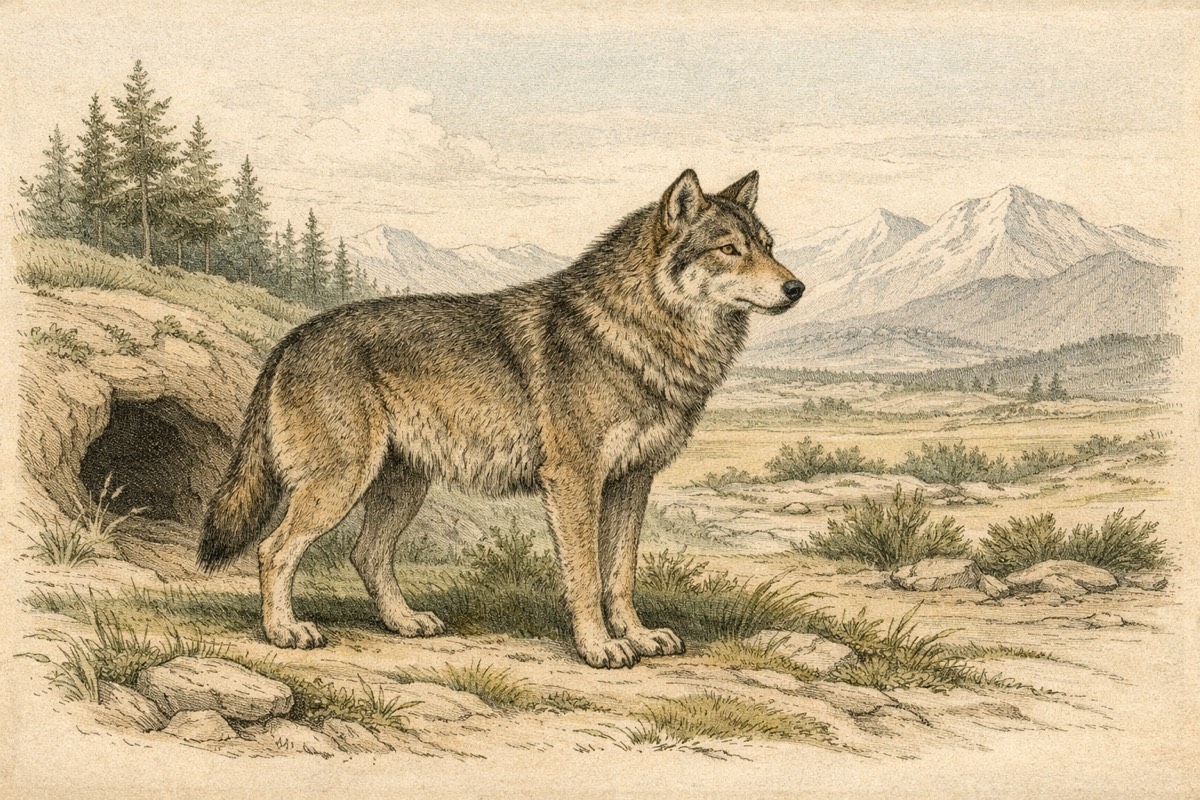
Quick Facts
| Scientific name | Canis lupus |
|---|---|
| Animal type | Mammal |
| Diet | Carnivore |
| Habitat | Forests, tundra, mountains, grasslands, and cold steppe |
| Lifespan | Often 6 to 8 years in the wild |
| Weight | About 20 to 80 kg depending on region and sex |
| Length or height | Around 1 to 1.6 meters long |
| Top speed | Up to 60 km/h |
| Conservation status | Least Concern globally, but variable by region |
Field Notes
60 notes and observations for quick reference.
- Scientifically, wolves are placed under Canis lupus.
- They belong to the mammal group.
- Their diet can be described as carnivore.
- They are most closely associated with forests, tundra, mountains, grasslands, and cold steppe.
- Life span is often 6 to 8 years in the wild.
- Adults commonly weigh about 20 to 80 kg depending on region and sex.
- Typical size is around 1 to 1.6 meters long.
- Top speed can reach up to 60 km/h.
- Their conservation status is currently listed as least concern globally, but variable by region.
- Wolves still range across parts of North America, Europe, and Asia.
- Wolves usually live in packs made up of a breeding pair and related offspring.
- They are often most active at dawn, dusk, and night.
- A group of wolves is called a pack.
- Young wolves are called pups.
- A wolf pack usually raises one litter of pups each year.
- Long legs and efficient movement allow wolves to travel great distances.
- Packs may cooperate to test, chase, and isolate vulnerable prey.
- Deer, elk, moose, boar, and smaller mammals are common prey depending on region.
- Smell and hearing are especially important for tracking prey and pack members.
- Howls, scent marks, posture, and facial expression help hold packs together.
- Teeth, stamina, teamwork, and social coordination are major strengths.
- Endurance movement and cooperative behavior help wolves hunt across large territories.
- Wolves depend on habitat quality, food supply, and safe breeding conditions to keep populations stable.
- Climate, food supply, and safe habitat all shape how successfully wolves can survive and reproduce.
- Wolves influence prey numbers and behavior and can trigger wider ecosystem effects.
- Persecution, habitat fragmentation, and conflict with livestock continue in many regions.
- Wolves can tolerate a wide range of climates if prey and territory remain available.
- Wolves have large paws that help distribute weight on snow or soft ground.
- Their thick coat provides insulation in cold climates.
- Long muzzles and strong jaw muscles help them grip and tear meat.
- Coat color varies widely from white and gray to brown or black.
- Their eyes are forward-facing, which supports depth perception while hunting.
- Wolves need large ranges because prey and pack movement cover broad distances.
- Den sites are often placed in sheltered ground, banks, or old burrows.
- Remote habitat helps packs avoid direct conflict with people.
- Snow, forest cover, and terrain shape hunting strategies in different regions.
- Pack members often help feed pups and guard den areas.
- Howling can help separated wolves find one another.
- Wolves spend much of their time moving rather than resting in one place.
- Social rank affects breeding, feeding order, and conflict within packs.
- Not every hunt ends in a kill, especially against large healthy prey.
- Wolves often target young, weak, injured, or old prey because it is less risky.
- They may scavenge carrion when it is available.
- A large carcass can feed a pack for several meals.
- When large prey is scarce, wolves can switch to smaller mammals or seasonal foods.
- Pups are born blind and rely completely on adults at first.
- Young wolves gradually join short trips outside the den before traveling with the pack.
- Dispersing wolves may leave to form new packs elsewhere.
- Learning social rules is essential for pack stability.
- Recovery programs have returned wolves to some regions where they had disappeared.
- Public debate around wolves often centers on livestock, hunting, and land use.
- Corridors are important because isolated packs can lose genetic diversity.
- Protecting wolves can help restore more natural predator-prey dynamics.
- A wolf howl can travel long distances in open country.
- Different packs may use the same landscape differently across seasons.
- Wolves can cover dozens of kilometers in a single day.
- Pack life is based on family relationships more often than on constant fighting.
- Snow can help wolves locate prey tracks, but it can also slow them down.
- Their expressions are subtler than people often expect, but pack members read them well.
- Wolves are among the best-known examples of social cooperation in wild carnivores.
Habitat and Range
Wolves are linked to forests, tundra, mountains, grasslands, and cold steppe. Wolves still range across parts of North America, Europe, and Asia. Wolves need large ranges because prey and pack movement cover broad distances. Den sites are often placed in sheltered ground, banks, or old burrows.
Behavior and Lifestyle
Wolves usually live in packs made up of a breeding pair and related offspring. They are often most active at dawn, dusk, and night. Pack members often help feed pups and guard den areas. Howling can help separated wolves find one another.
Diet and Feeding
Their diet is carnivore. Packs may cooperate to test, chase, and isolate vulnerable prey. Deer, elk, moose, boar, and smaller mammals are common prey depending on region. Wolves often target young, weak, injured, or old prey because it is less risky.
Conservation and Adaptations
Endurance movement and cooperative behavior help wolves hunt across large territories. Persecution, habitat fragmentation, and conflict with livestock continue in many regions. Recovery programs have returned wolves to some regions where they had disappeared. Wolves influence prey numbers and behavior and can trigger wider ecosystem effects.