
Bear
Bears are powerful mammals whose diets, habitats, and seasonal behavior vary widely from forests to arctic shores.
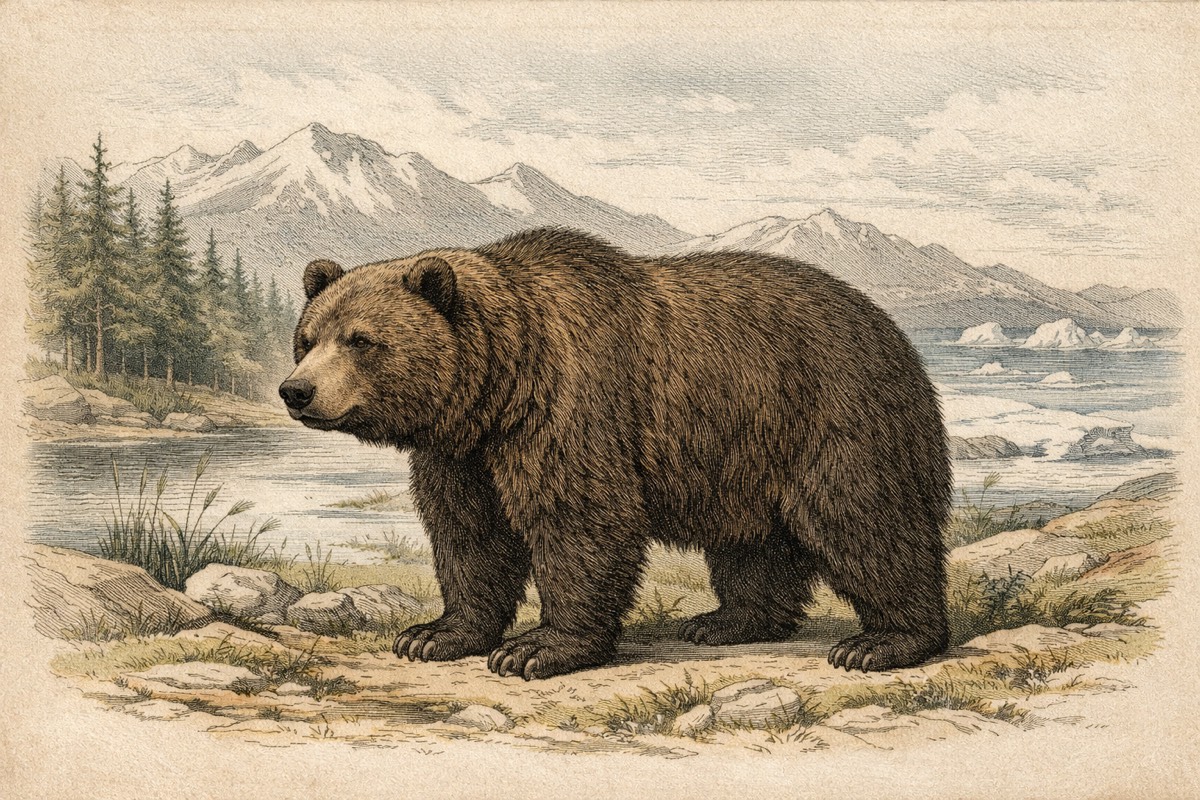
Bears live in forests, mountains, tundra, wetlands, and arctic coastlines. Bears occur in North America, South America, Europe, and Asia depending on species. Diet flexibility allows many bears to survive across strongly seasonal habitats. Bears disperse seeds, move nutrients, and affect prey or scavenger communities.
Most bears are solitary outside of mating and maternal care. Many species are active by day or twilight, but behavior shifts with food and disturbance. Habitat loss, climate change, poaching, and conflict with people threaten some species.
Quick Facts
| Scientific name | Family Ursidae |
|---|---|
| Animal type | Mammal |
| Diet | Omnivore, though some species are more specialized |
| Habitat | Forests, mountains, tundra, wetlands, and arctic coastlines |
| Lifespan | Often 15 to 30 years depending on species |
| Weight | About 25 to more than 600 kg depending on species |
| Length or height | Roughly 1.2 to 3 meters long |
| Top speed | Up to 50 km/h in some species |
| Conservation status | Varies by species |
Field Notes
60 notes and observations for quick reference.
- Scientifically, bears are placed under Family Ursidae.
- They belong to the mammal group.
- Their diet can be described as omnivore, though some species are more specialized.
- They are most closely associated with forests, mountains, tundra, wetlands, and arctic coastlines.
- Life span is often 15 to 30 years depending on species.
- Adults commonly weigh about 25 to more than 600 kg depending on species.
- Typical size is roughly 1.2 to 3 meters long.
- Top speed can reach up to 50 km/h in some species.
- Their conservation status is currently listed as varies by species.
- Bears occur in North America, South America, Europe, and Asia depending on species.
- Most bears are solitary outside of mating and maternal care.
- Many species are active by day or twilight, but behavior shifts with food and disturbance.
- Bears are mostly solitary, though a group may be called a sloth or sleuth.
- Young bears are called cubs.
- Female bears usually give birth to small litters and invest heavily in parental care.
- Bears can walk long distances, climb, dig, swim, and in some species sprint with surprising speed.
- They use strength and a strong sense of smell to locate foods that range from berries to fish.
- Depending on species, bears may eat plants, insects, fish, carrion, or live mammals.
- Smell is especially developed and often better than hearing or vision for finding food.
- Body posture, scent, vocal sounds, and claw or bite marks all play roles in communication.
- Large size, strength, claws, and thick fur make bears hard to challenge.
- Diet flexibility allows many bears to survive across strongly seasonal habitats.
- Bears depend on habitat quality, food supply, and safe breeding conditions to keep populations stable.
- Climate, food supply, and safe habitat all shape how successfully bears can survive and reproduce.
- Bears disperse seeds, move nutrients, and affect prey or scavenger communities.
- Habitat loss, climate change, poaching, and conflict with people threaten some species.
- Different species live in climates from tropical forests to polar regions.
- Bears have plantigrade feet, meaning they walk on the soles of their feet.
- Long claws may be used for digging, climbing, or catching prey depending on species.
- A bear's body shape reflects its diet and habitat, from stocky forest species to streamlined polar bears.
- Thick fur provides insulation, but some species rely more on shade or cool habitats than on heavy coats.
- Strong neck and shoulder muscles help bears dig, overturn logs, or drag food.
- Many bears need large home ranges because food shifts with season and elevation.
- Den sites provide security during cold weather, harsh storms, or cub rearing.
- Salmon rivers, berry patches, and nut-bearing forests can support high bear activity.
- Habitat fragmentation raises conflict risk when bears move through farms or towns.
- Some bears accumulate fat in productive seasons to survive lean periods.
- Mothers are especially defensive when cubs are young.
- Bears often stand upright to smell better, not necessarily to threaten.
- Individual bears can remember productive feeding sites year after year.
- Many species are curious and highly intelligent problem-solvers.
- Even large bears may spend much of the year eating plants or insects rather than meat.
- Salmon can be an extremely important food source for some coastal populations.
- Bears may dig for roots, bulbs, and small burrowing animals.
- Food abundance in one season can strongly affect reproduction and cub survival later.
- Cubs are born very small relative to the size of the mother.
- Some species show delayed implantation, which helps time birth to favorable seasons.
- Young bears may stay with their mother for more than a year.
- Slow reproduction makes population recovery difficult after heavy losses.
- Bear conservation often depends on keeping large landscapes connected.
- Secure food storage and waste management help reduce conflict near people.
- Climate change is especially serious for species tied to sea ice or predictable seasonal food.
- Monitoring bear numbers often requires remote cameras, DNA from hair, or field tracking.
- A bear can often smell food from very long distances.
- Not all bears hibernate in the same way, and some do not hibernate at all.
- Black bears can be black, brown, cinnamon, or even pale in some regions.
- Bears can be excellent swimmers when they need to cross lakes or rivers.
- Despite their size, many bears move quietly through forest cover.
- Their intelligence helps them remember routes, feeding places, and human risk areas.
- Bear species differ so much that a panda and a polar bear represent very different lifestyles within the same family.
Habitat and Range
Bears are linked to forests, mountains, tundra, wetlands, and arctic coastlines. Bears occur in North America, South America, Europe, and Asia depending on species. Many bears need large home ranges because food shifts with season and elevation. Den sites provide security during cold weather, harsh storms, or cub rearing.
Behavior and Lifestyle
Most bears are solitary outside of mating and maternal care. Many species are active by day or twilight, but behavior shifts with food and disturbance. Some bears accumulate fat in productive seasons to survive lean periods. Mothers are especially defensive when cubs are young.
Diet and Feeding
Their diet is omnivore, though some species are more specialized. They use strength and a strong sense of smell to locate foods that range from berries to fish. Depending on species, bears may eat plants, insects, fish, carrion, or live mammals. Even large bears may spend much of the year eating plants or insects rather than meat.
Conservation and Adaptations
Diet flexibility allows many bears to survive across strongly seasonal habitats. Habitat loss, climate change, poaching, and conflict with people threaten some species. Bear conservation often depends on keeping large landscapes connected. Bears disperse seeds, move nutrients, and affect prey or scavenger communities.