
Zebra
Zebras are striped grazing mammals whose alertness, mobility, and social behavior help them survive in open landscapes.
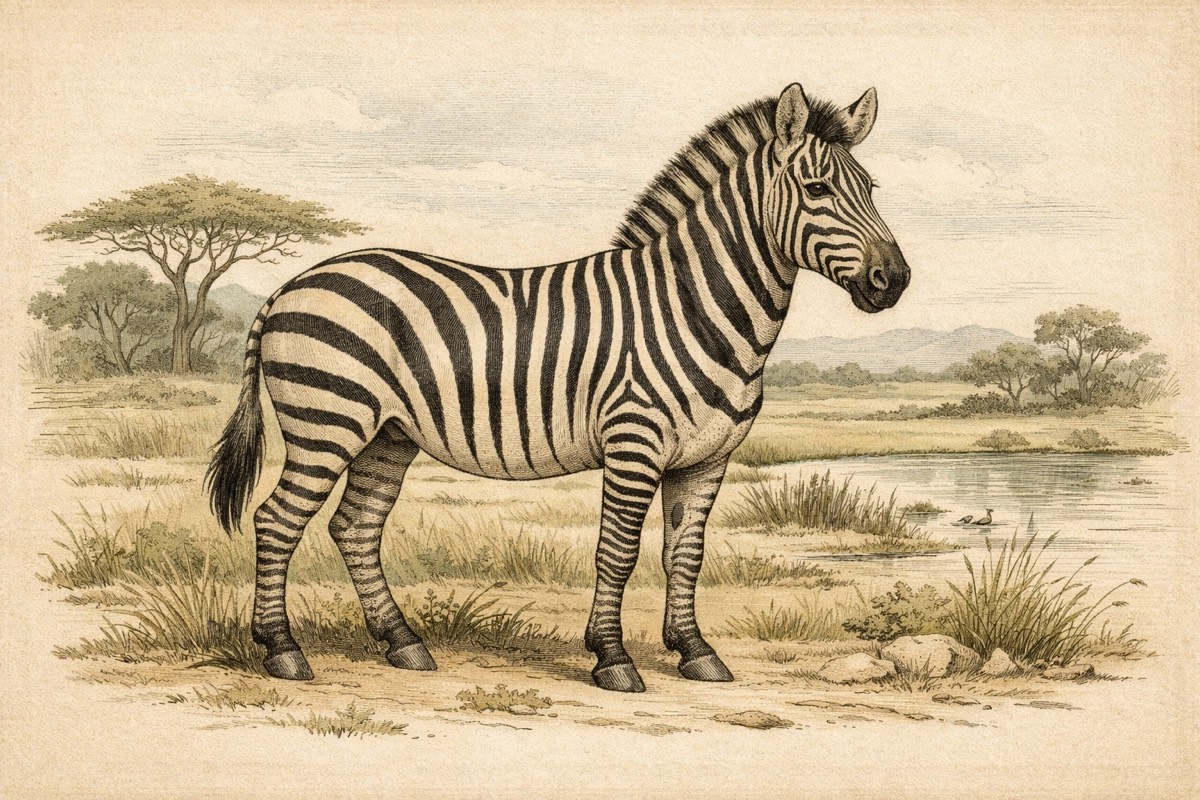
Zebras live in grasslands, savannas, and open woodland. Zebras live in parts of eastern and southern Africa. Their striped coat may help with recognition, parasite defense, and confusion during movement. Zebras are important grazers that influence grassland structure and serve as prey for large carnivores.
Many zebras live in family groups or larger herds that improve vigilance. They are active in both daylight and cooler evening hours. Habitat fragmentation, competition with livestock, and hunting affect some populations.
Quick Facts
| Scientific name | Equus zebra, Equus quagga, and Equus grevyi |
|---|---|
| Animal type | Mammal |
| Diet | Herbivore |
| Habitat | Grasslands, savannas, and open woodland |
| Lifespan | Around 20 to 25 years |
| Weight | About 175 to 450 kg depending on species |
| Length or height | Around 1.2 to 1.5 meters at the shoulder |
| Top speed | Up to 65 km/h |
| Conservation status | Varies by species from Near Threatened to Endangered |
Field Notes
60 notes and observations for quick reference.
- Scientifically, zebras are placed under Equus zebra, Equus quagga, and Equus grevyi.
- They belong to the mammal group.
- Their diet can be described as herbivore.
- They are most closely associated with grasslands, savannas, and open woodland.
- Life span is around 20 to 25 years.
- Adults commonly weigh about 175 to 450 kg depending on species.
- Typical size is around 1.2 to 1.5 meters at the shoulder.
- Top speed can reach up to 65 km/h.
- Their conservation status is currently listed as varies by species from near threatened to endangered.
- Zebras live in parts of eastern and southern Africa.
- Many zebras live in family groups or larger herds that improve vigilance.
- They are active in both daylight and cooler evening hours.
- A group of zebras is commonly called a herd.
- Young zebras are called foals.
- A single foal is usually born after a pregnancy lasting about a year.
- Zebras are endurance movers that rely on fast running and sharp turns to escape danger.
- They graze steadily and can handle coarser grasses than some other herbivores.
- They do not hunt prey; grasses form most of their diet.
- Wide vision, good hearing, and sensitivity to movement help zebras detect predators early.
- Zebras use whinnies, snorts, ear position, and facial expression to communicate.
- Kicks, bites, and coordinated escape behavior are their main defenses.
- Their striped coat may help with recognition, parasite defense, and confusion during movement.
- Zebras depend on habitat quality, food supply, and safe breeding conditions to keep populations stable.
- Climate, food supply, and safe habitat all shape how successfully zebras can survive and reproduce.
- Zebras are important grazers that influence grassland structure and serve as prey for large carnivores.
- Habitat fragmentation, competition with livestock, and hunting affect some populations.
- Open, seasonal grasslands with access to water suit zebras well.
- No two zebras have exactly the same stripe pattern.
- Striping extends onto the mane and legs in most species.
- Grevy's zebra has especially narrow stripes compared with other zebras.
- Their sturdy teeth are adapted for grinding abrasive grasses.
- Long legs help zebras cover ground efficiently during migration or escape.
- Open country helps zebras spot danger from a distance.
- Many zebra populations stay close to reliable water during dry periods.
- Seasonal rain can trigger broad movements toward fresh grass growth.
- Different zebra species use habitat slightly differently, from dry plains to hill country.
- Zebras often stand close together while resting or watching for danger.
- Mutual grooming strengthens social bonds in family groups.
- Mothers quickly help foals recognize their stripe pattern, voice, and smell.
- Zebras can be aggressive when cornered, especially stallions protecting a group.
- Herd life reduces the chance that any single zebra will be caught unaware.
- Their digestive system allows them to process large amounts of lower-quality forage.
- Zebras often graze ahead of more selective herbivores, opening access to new growth.
- Fresh grass after rain is especially valuable because it is more nutritious.
- During harsh seasons, they may travel farther in search of grazing.
- Foals can stand and run shortly after birth.
- Early bonding with the mother is especially important in large herds.
- Young zebras learn routes, water points, and social cues from adults.
- Predation pressure is highest for very young foals.
- Grevy's zebra requires particular conservation attention because its numbers are much lower than plains zebra numbers.
- Maintaining connected rangelands helps zebras move between seasonal resources.
- Monitoring water access is important in drought-prone landscapes.
- Protecting zebras also supports predators and scavengers that depend on open savanna food webs.
- Scientists continue to study exactly how zebra stripes function in the wild.
- Foals are born with brownish striping that darkens over time.
- Zebras may choose windy or open ground where biting flies are less intense.
- A startled zebra herd can change direction very quickly.
- Their ears swivel to track sounds from different directions.
- Stripe patterns make it easy for mothers and foals to recognize one another.
- Zebras are relatives of horses and donkeys, but they were never widely domesticated.
Habitat and Range
Zebras are linked to grasslands, savannas, and open woodland. Zebras live in parts of eastern and southern Africa. Open country helps zebras spot danger from a distance. Many zebra populations stay close to reliable water during dry periods.
Behavior and Lifestyle
Many zebras live in family groups or larger herds that improve vigilance. They are active in both daylight and cooler evening hours. Zebras often stand close together while resting or watching for danger. Mutual grooming strengthens social bonds in family groups.
Diet and Feeding
Their diet is herbivore. They graze steadily and can handle coarser grasses than some other herbivores. They do not hunt prey; grasses form most of their diet. Their digestive system allows them to process large amounts of lower-quality forage.
Conservation and Adaptations
Their striped coat may help with recognition, parasite defense, and confusion during movement. Habitat fragmentation, competition with livestock, and hunting affect some populations. Grevy's zebra requires particular conservation attention because its numbers are much lower than plains zebra numbers. Zebras are important grazers that influence grassland structure and serve as prey for large carnivores.