
Elephant
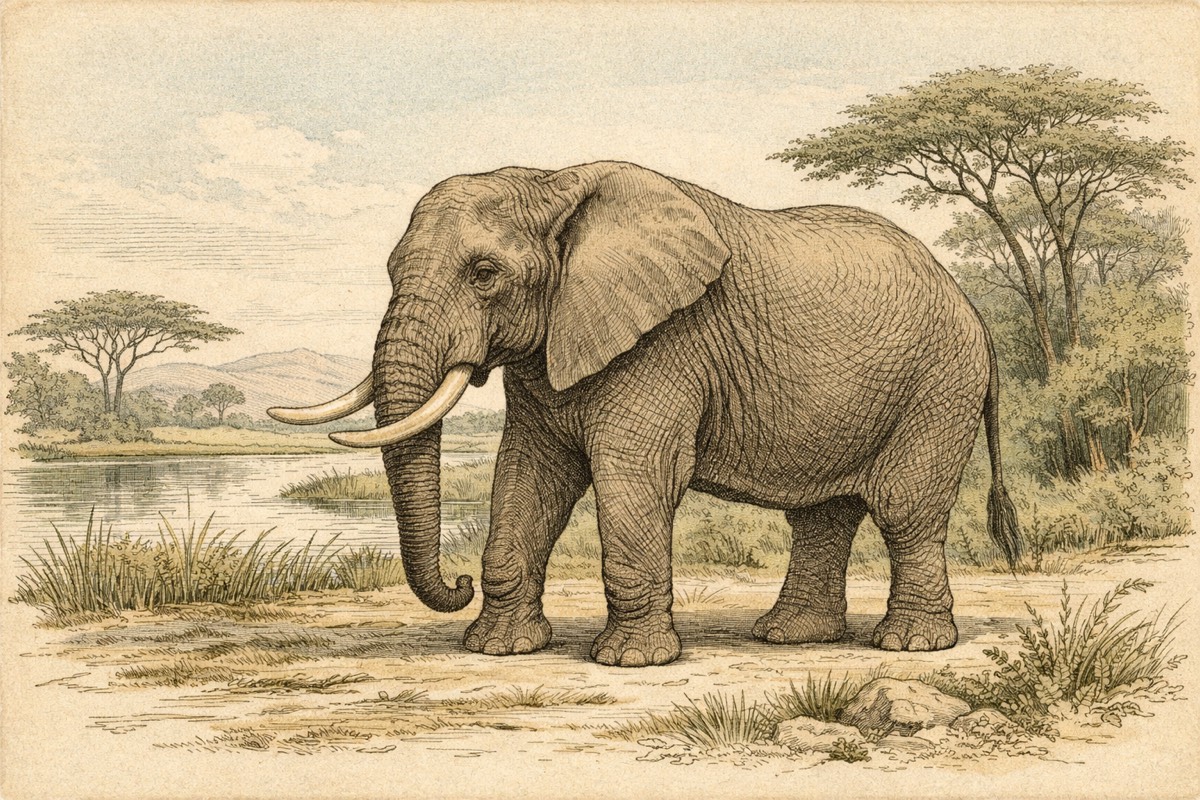
Elephants are the largest land animals, known for trunks, tusks, strong family bonds, and exceptional memory.
Elephants live in savannas, forests, wetlands, and grasslands. Elephants live in parts of sub-Saharan Africa and South and Southeast Asia. The trunk is a remarkable adaptation used for breathing, feeding, drinking, smelling, and social contact. Elephants are ecosystem engineers because they open paths, spread seeds, and reshape vegetation.
Females usually live in family groups led by experienced matriarchs, while adult males are more independent. They can be active at any time of day, often shifting movement with heat and human disturbance. Poaching, habitat loss, and conflict with people threaten many elephant populations.
Quick Facts
| Scientific name | Loxodonta and Elephas |
|---|---|
| Animal type | Mammal |
| Diet | Herbivore |
| Habitat | Savannas, forests, wetlands, and grasslands |
| Lifespan | Often 50 to 70 years |
| Weight | About 2,000 to 6,000 kg depending on species and sex |
| Length or height | Up to about 4 meters tall at the shoulder |
| Top speed | Up to 40 km/h |
| Conservation status | Threatened, with status varying by species |
Field Notes
60 notes and observations for quick reference.
- Scientifically, elephants are placed under Loxodonta and Elephas.
- They belong to the mammal group.
- Their diet can be described as herbivore.
- They are most closely associated with savannas, forests, wetlands, and grasslands.
- Life span is often 50 to 70 years.
- Adults commonly weigh about 2,000 to 6,000 kg depending on species and sex.
- Body size can reach up to about 4 meters tall at the shoulder.
- Top speed can reach up to 40 km/h.
- Their conservation status is currently listed as threatened, with status varying by species.
- Elephants live in parts of sub-Saharan Africa and South and Southeast Asia.
- Females usually live in family groups led by experienced matriarchs, while adult males are more independent.
- They can be active at any time of day, often shifting movement with heat and human disturbance.
- A group of elephants is often called a herd.
- Young elephants are called calves.
- Elephants have one of the longest known mammalian pregnancies, lasting close to two years.
- They travel steadily over long distances and can cross varied terrain with surprising quietness.
- Elephants spend much of the day feeding because their huge bodies require a great deal of plant matter.
- They do not hunt prey; they feed on grasses, bark, leaves, roots, fruit, and other vegetation.
- Strong smell, sensitive feet, and low-frequency hearing help elephants interpret their environment.
- Elephants communicate with touch, posture, trumpets, rumbles, and even vibrations through the ground.
- Body size, tusks, trunks, and coordinated herd behavior help protect elephants from danger.
- The trunk is a remarkable adaptation used for breathing, feeding, drinking, smelling, and social contact.
- Elephants depend on habitat quality, food supply, and safe breeding conditions to keep populations stable.
- Climate, food supply, and safe habitat all shape how successfully elephants can survive and reproduce.
- Elephants are ecosystem engineers because they open paths, spread seeds, and reshape vegetation.
- Poaching, habitat loss, and conflict with people threaten many elephant populations.
- Elephants thrive where food, water, and enough space for seasonal movement are available.
- An elephant's trunk contains thousands of muscle units and no bones.
- Tusks are actually elongated incisor teeth.
- Large ears help release body heat, especially in African elephants.
- Their thick skin still needs mud, dust, or shade to prevent overheating and irritation.
- Elephant feet are cushioned, which helps support great weight and soften footsteps.
- Elephants often follow traditional routes between feeding areas and water sources.
- Forest elephants move through denser vegetation than savanna elephants.
- Seasonal rainfall can strongly influence where elephant herds travel.
- Wetlands, riverbanks, and mineral-rich areas are especially valuable to many populations.
- Elephants frequently touch one another with their trunks during greeting and reassurance.
- Matriarchs help family groups respond to danger based on long experience.
- Young elephants learn social behavior through close contact with older relatives.
- Adult bulls may enter a condition called musth, during which hormones and behavior change.
- Elephants are known to investigate bones and remains, showing strong curiosity.
- Elephants can strip bark from trees when other plant foods are limited.
- They use the trunk to pull grasses, pluck leaves, and gather fruit.
- A single elephant may consume hundreds of kilograms of vegetation in a day.
- Their feeding can open dense vegetation and create space for other species.
- Calves depend heavily on their mothers and allomothers within the herd.
- Elephants mature slowly compared with many other mammals.
- Long life spans mean that knowledge can pass through several generations.
- Low reproductive rates make recovery from population loss especially difficult.
- Protecting migration routes is essential because elephants need room to move seasonally.
- Reducing ivory demand is an important part of elephant conservation.
- Early warning systems can help reduce crop-raiding conflict near farms.
- Saving elephants often protects a wide range of other species that share the same landscapes.
- Elephants can use their trunks like snorkels when crossing deep water.
- Some populations visit mineral licks to obtain nutrients.
- Their footprints can collect rainwater and create tiny habitats for smaller animals.
- Elephants may throw dust or mud over their backs as a natural skin treatment.
- Calves often practice trunk control clumsily before they master it.
- Low rumbles can travel farther than many higher-pitched calls.
- Few other land animals change landscapes as visibly as elephants do.
Habitat and Range
Elephants are linked to savannas, forests, wetlands, and grasslands. Elephants live in parts of sub-Saharan Africa and South and Southeast Asia. Elephants often follow traditional routes between feeding areas and water sources. Forest elephants move through denser vegetation than savanna elephants.
Behavior and Lifestyle
Females usually live in family groups led by experienced matriarchs, while adult males are more independent. They can be active at any time of day, often shifting movement with heat and human disturbance. Elephants frequently touch one another with their trunks during greeting and reassurance. Matriarchs help family groups respond to danger based on long experience.
Diet and Feeding
Their diet is herbivore. Elephants spend much of the day feeding because their huge bodies require a great deal of plant matter. They do not hunt prey; they feed on grasses, bark, leaves, roots, fruit, and other vegetation. Elephants can strip bark from trees when other plant foods are limited.
Conservation and Adaptations
The trunk is a remarkable adaptation used for breathing, feeding, drinking, smelling, and social contact. Poaching, habitat loss, and conflict with people threaten many elephant populations. Protecting migration routes is essential because elephants need room to move seasonally. Elephants are ecosystem engineers because they open paths, spread seeds, and reshape vegetation.