
Giraffe
Giraffes are towering browsers with long necks, patterned coats, and specialized feeding adaptations for tree leaves.
Giraffes live in savannas, woodlands, and open scrublands. Giraffes live in scattered populations across sub-Saharan Africa. A long neck and prehensile tongue help giraffes feed efficiently in thorny trees. Giraffes shape browsing pressure on trees and can help spread seeds.
They often live in loose social groups that change composition over time. Giraffes feed through much of the day and night in short cycles. Habitat loss, poaching, and fragmentation threaten several giraffe populations.
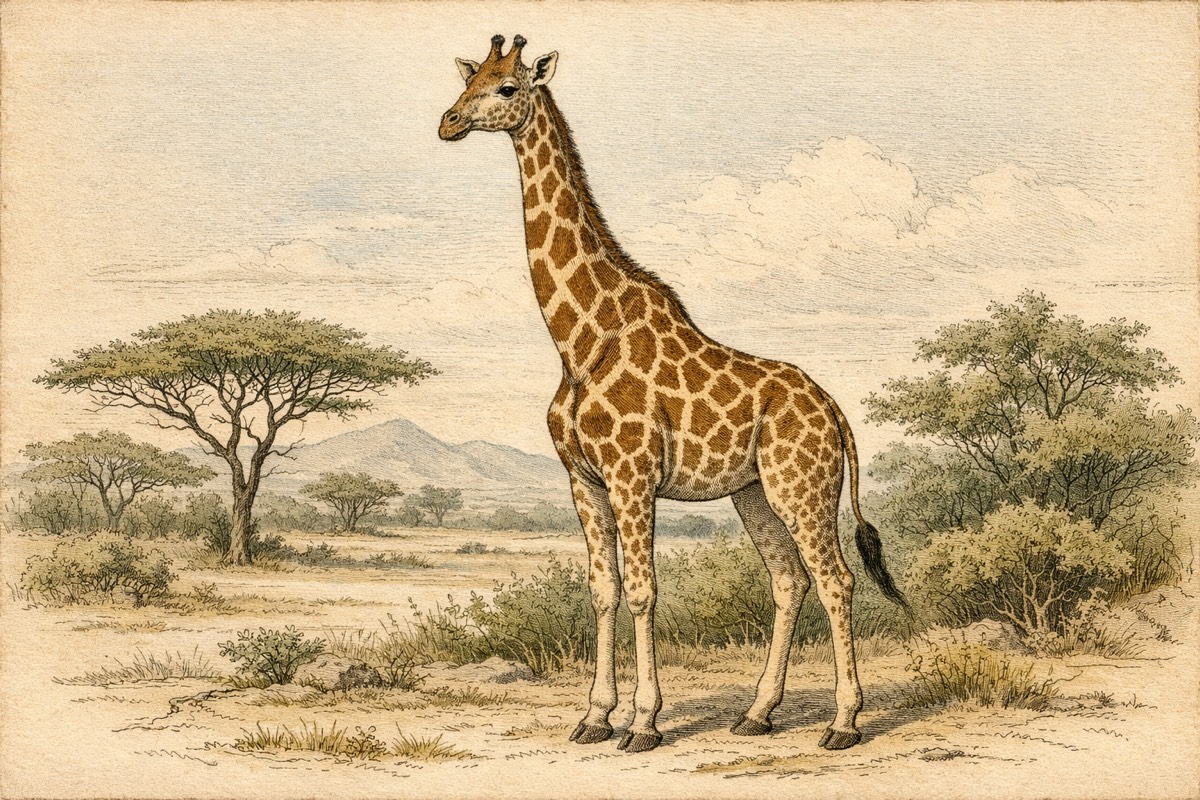
Quick Facts
| Scientific name | Giraffa |
|---|---|
| Animal type | Mammal |
| Diet | Herbivore |
| Habitat | Savannas, woodlands, and open scrublands |
| Lifespan | About 20 to 25 years in the wild |
| Weight | Roughly 800 to 1,900 kg |
| Length or height | Up to about 5.5 meters tall |
| Top speed | Up to 60 km/h |
| Conservation status | Vulnerable overall, with status varying by population |
Field Notes
60 notes and observations for quick reference.
- Scientifically, giraffes are placed under Giraffa.
- They belong to the mammal group.
- Their diet can be described as herbivore.
- They are most closely associated with savannas, woodlands, and open scrublands.
- Life span is about 20 to 25 years in the wild.
- Adults commonly weigh roughly 800 to 1,900 kg.
- Body size can reach up to about 5.5 meters tall.
- Top speed can reach up to 60 km/h.
- Their conservation status is currently listed as vulnerable overall, with status varying by population.
- Giraffes live in scattered populations across sub-Saharan Africa.
- They often live in loose social groups that change composition over time.
- Giraffes feed through much of the day and night in short cycles.
- A group of giraffes is sometimes called a tower.
- Young giraffes are called calves.
- A calf is usually born after a pregnancy of roughly 15 months.
- They move with a distinctive pacing gait and can run surprisingly fast when needed.
- Giraffes browse high foliage that many other herbivores cannot reach easily.
- They do not hunt prey; leaves, buds, flowers, and seed pods are their main foods.
- Wide-set eyes give giraffes an excellent view over long distances.
- They use posture, scent, visual signals, and low sounds that are still being studied.
- Height, vigilance, and powerful kicks help giraffes defend themselves.
- A long neck and prehensile tongue help giraffes feed efficiently in thorny trees.
- Giraffes depend on habitat quality, food supply, and safe breeding conditions to keep populations stable.
- Climate, food supply, and safe habitat all shape how successfully giraffes can survive and reproduce.
- Giraffes shape browsing pressure on trees and can help spread seeds.
- Habitat loss, poaching, and fragmentation threaten several giraffe populations.
- Open, dry landscapes with scattered trees suit giraffes well.
- A giraffe's dark tongue helps protect it from sun exposure while feeding.
- Each giraffe has a unique coat pattern.
- Short horn-like structures on the head are called ossicones.
- Long legs give giraffes both height and stride length.
- Specialized blood pressure control helps them lower and raise the head safely.
- Acacia-rich habitats are especially valuable to many giraffe populations.
- Giraffes need open views because early detection of predators improves survival.
- Water is useful, but giraffes can get much moisture from the plants they eat.
- Seasonal leaf growth can influence movement and feeding choices.
- Adult males sometimes engage in necking contests to establish dominance.
- Giraffes spend a large part of their day feeding because leaves are relatively low in energy.
- They often rest standing up and can sleep for very short periods.
- Calves may gather in nursery groups while adults feed nearby.
- Giraffes are generally quiet animals, but they are not completely silent.
- A prehensile upper lip helps giraffes strip leaves from branches.
- They can feed among thorns thanks to tough mouths and precise tongue control.
- Browsing high in the canopy reduces competition with many shorter herbivores.
- Different tree species become important at different times of year.
- A newborn giraffe calf drops to the ground at birth and must stand quickly.
- Rapid early growth is important because tall legs improve safety.
- Young giraffes stay close to adults for protection.
- Maturity takes several years, especially for males.
- Because giraffes range over large landscapes, isolated populations can become vulnerable.
- Population trends differ strongly between regions, so local monitoring matters.
- Conserving tree-rich savanna habitat benefits giraffes and many bird species at the same time.
- Anti-poaching work is still important even in places where giraffes seem common.
- Giraffes only need to spread their legs awkwardly when drinking because of their height.
- Their height makes them one of the first animals to notice distant movement.
- A giraffe kick is strong enough to injure large predators.
- Calves spend their first months learning when to freeze and when to run.
- The same long neck that helps feeding also plays a role in male contests.
- Even with long legs, giraffes can move quietly through dry woodland.
- Few animals are as instantly recognizable by silhouette as a giraffe.
Habitat and Range
Giraffes are linked to savannas, woodlands, and open scrublands. Giraffes live in scattered populations across sub-Saharan Africa. Acacia-rich habitats are especially valuable to many giraffe populations. Giraffes need open views because early detection of predators improves survival.
Behavior and Lifestyle
They often live in loose social groups that change composition over time. Giraffes feed through much of the day and night in short cycles. Adult males sometimes engage in necking contests to establish dominance. Giraffes spend a large part of their day feeding because leaves are relatively low in energy.
Diet and Feeding
Their diet is herbivore. Giraffes browse high foliage that many other herbivores cannot reach easily. They do not hunt prey; leaves, buds, flowers, and seed pods are their main foods. A prehensile upper lip helps giraffes strip leaves from branches.
Conservation and Adaptations
A long neck and prehensile tongue help giraffes feed efficiently in thorny trees. Habitat loss, poaching, and fragmentation threaten several giraffe populations. Because giraffes range over large landscapes, isolated populations can become vulnerable. Giraffes shape browsing pressure on trees and can help spread seeds.