
Shark
Sharks are ancient cartilaginous fish with keen senses, varied body shapes, and major roles in marine food webs.
Sharks live in open ocean, reefs, coasts, seabeds, and some rivers. Sharks live in seas around the world, from shallow reefs to the deep ocean. Cartilage skeletons and highly specialized senses help sharks move and hunt efficiently. Many sharks act as top or mid-level predators that help structure marine communities.
Many sharks are solitary, though some gather seasonally or around rich food sources. Activity patterns vary by species, habitat, and prey availability. Overfishing, bycatch, habitat damage, and slow reproduction threaten many species.
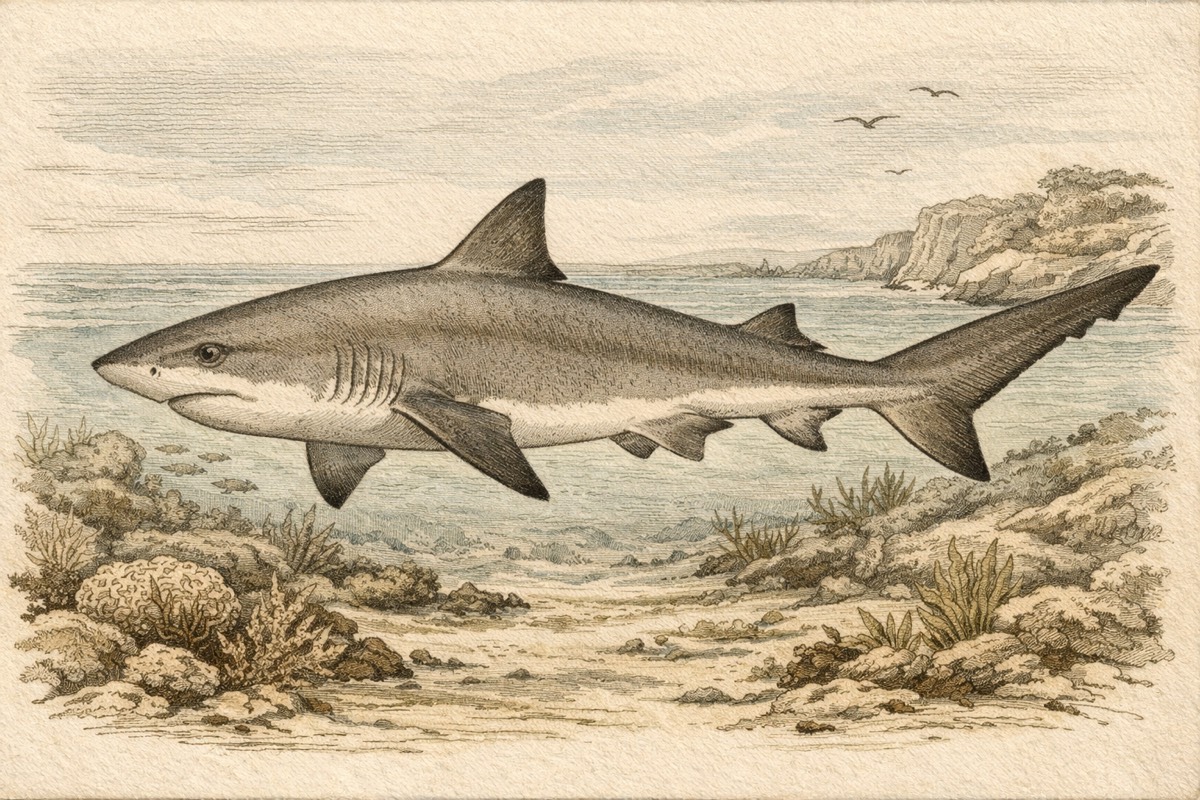
Quick Facts
| Scientific name | Superorder Selachimorpha |
|---|---|
| Animal type | Fish |
| Diet | Mostly carnivore, varying by species |
| Habitat | Open ocean, reefs, coasts, seabeds, and some rivers |
| Lifespan | From under 20 years to many decades depending on species |
| Weight | From less than 1 kg to several tonnes depending on species |
| Length or height | From under 20 cm to more than 12 meters depending on species |
| Top speed | Up to 70 km/h in the fastest species |
| Conservation status | Many species are threatened |
Field Notes
60 notes and observations for quick reference.
- Scientifically, sharks are placed under Superorder Selachimorpha.
- They belong to the fish group.
- Their diet can be described as mostly carnivore, varying by species.
- They are most closely associated with open ocean, reefs, coasts, seabeds, and some rivers.
- Life span ranges from under 20 years to many decades depending on species.
- Adult weight ranges from less than 1 kg to several tonnes depending on species.
- Body size ranges from under 20 cm to more than 12 meters depending on species.
- Top speed can reach up to 70 km/h in the fastest species.
- Their conservation status is currently listed as many species are threatened.
- Sharks live in seas around the world, from shallow reefs to the deep ocean.
- Many sharks are solitary, though some gather seasonally or around rich food sources.
- Activity patterns vary by species, habitat, and prey availability.
- A group of sharks may be called a shiver.
- Young sharks are called pups.
- Sharks may lay eggs, retain eggs internally, or give birth to live young depending on species.
- A streamlined body, powerful tail, and fins make sharks efficient swimmers.
- Different sharks use different feeding strategies, from ambush to pursuit to filter feeding.
- Fish, squid, seals, crustaceans, plankton, or carrion may be eaten depending on species.
- Smell, vibration detection, electroreception, and good hearing make sharks effective hunters.
- Sharks do not vocalize like mammals, but posture and movement can signal intent.
- Speed, teeth, skin texture, and sensory awareness make sharks hard to challenge in water.
- Cartilage skeletons and highly specialized senses help sharks move and hunt efficiently.
- Sharks depend on habitat quality, food supply, and safe breeding conditions to keep populations stable.
- Climate, food supply, and safe habitat all shape how successfully sharks can survive and reproduce.
- Many sharks act as top or mid-level predators that help structure marine communities.
- Overfishing, bycatch, habitat damage, and slow reproduction threaten many species.
- Shark species occupy tropical, temperate, and even cold waters depending on biology.
- A shark's skeleton is made of cartilage rather than bone.
- Rows of replacement teeth allow many sharks to keep functioning teeth throughout life.
- Placoid scales make the skin feel rough and can reduce drag.
- Body shape varies greatly between reef hunters, bottom dwellers, and open-ocean swimmers.
- The tail shape often reflects how fast and continuously a shark swims.
- Reef sharks depend on structurally rich habitats full of fish and cover.
- Some sharks spend much of their time near the seabed.
- Oceanic sharks may travel huge distances through open water.
- Nursery areas in bays or shallow coasts are important for many young sharks.
- Some sharks migrate seasonally in response to water temperature or prey movement.
- Many species avoid wasting energy and only accelerate strongly when needed.
- Sharks often investigate unfamiliar objects with careful passes rather than immediate attack.
- Courtship and mating behavior can be physically demanding for both sexes.
- Some sharks gather at predictable feeding sites or cleaning stations.
- Not all sharks are apex predators; some feed mainly on small fish or plankton.
- Filter-feeding sharks can strain vast amounts of water to collect tiny prey.
- Bottom-dwelling sharks may feed on crustaceans, mollusks, or buried animals.
- Sharp teeth shapes often match the type of prey a species usually handles.
- Many sharks grow slowly and mature late compared with bony fish.
- Small litter sizes make some species especially vulnerable to overfishing.
- Pups often receive no parental care after birth or hatching.
- Nursery habitat quality strongly affects juvenile survival.
- Shark fins and meat have driven heavy pressure on many populations.
- Because many sharks reproduce slowly, depleted numbers can take a long time to recover.
- Marine protected areas help most when they cover key breeding and nursery grounds.
- Public understanding is important because fear-based myths can undermine conservation.
- Electroreception allows sharks to detect tiny electrical signals produced by muscles.
- Some sharks can rest on the seafloor, while others must keep moving to ventilate well.
- The whale shark is the largest fish in the world and feeds mainly on tiny prey.
- Ancestors of sharks swam the oceans long before dinosaurs appeared.
- Not all shark species look like the classic streamlined reef hunter.
- The same ocean may hold fast open-water sharks and slow bottom-dwelling sharks in very different niches.
- Sharks are far more diverse than the single stereotype often shown in popular media.
Habitat and Range
Sharks are linked to open ocean, reefs, coasts, seabeds, and some rivers. Sharks live in seas around the world, from shallow reefs to the deep ocean. Reef sharks depend on structurally rich habitats full of fish and cover. Some sharks spend much of their time near the seabed.
Behavior and Lifestyle
Many sharks are solitary, though some gather seasonally or around rich food sources. Activity patterns vary by species, habitat, and prey availability. Some sharks migrate seasonally in response to water temperature or prey movement. Many species avoid wasting energy and only accelerate strongly when needed.
Diet and Feeding
Their diet is mostly carnivore, varying by species. Different sharks use different feeding strategies, from ambush to pursuit to filter feeding. Fish, squid, seals, crustaceans, plankton, or carrion may be eaten depending on species. Not all sharks are apex predators; some feed mainly on small fish or plankton.
Conservation and Adaptations
Cartilage skeletons and highly specialized senses help sharks move and hunt efficiently. Overfishing, bycatch, habitat damage, and slow reproduction threaten many species. Shark fins and meat have driven heavy pressure on many populations. Many sharks act as top or mid-level predators that help structure marine communities.