
Crocodile
Crocodiles are large semiaquatic reptiles built for ambush, powerful bites, and patient life near the water's edge.
Crocodiles live in rivers, lakes, marshes, mangroves, and estuaries. Crocodiles live in tropical and subtropical regions of Africa, Asia, the Americas, and Australia. Their body plan is ideal for staying mostly submerged while watching above-water prey. Crocodiles are major predators and scavengers in wetland food webs.
They are often solitary but may gather where food, nesting sites, or basking areas are favorable. Activity often rises at night or during cooler parts of the day. Habitat loss, persecution, pollution, and illegal hunting affect some species.
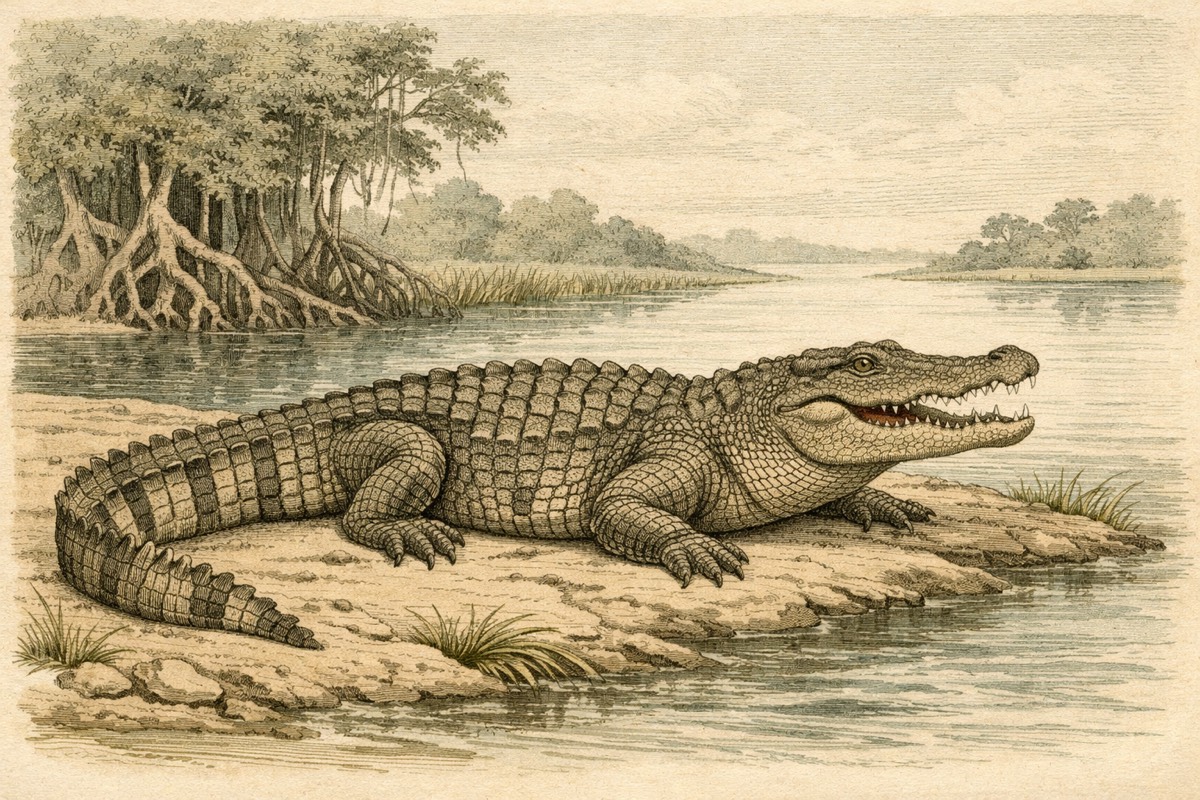
Quick Facts
| Scientific name | Family Crocodylidae |
|---|---|
| Animal type | Reptile |
| Diet | Carnivore |
| Habitat | Rivers, lakes, marshes, mangroves, and estuaries |
| Lifespan | Often 40 to 70 years depending on species |
| Weight | From under 100 kg to more than 1,000 kg depending on species |
| Length or height | From about 2 meters to over 6 meters depending on species |
| Top speed | Fast short bursts in water and brief sprints on land |
| Conservation status | Varies by species |
Field Notes
60 notes and observations for quick reference.
- Scientifically, crocodiles are placed under Family Crocodylidae.
- They belong to the reptile group.
- Their diet can be described as carnivore.
- They are most closely associated with rivers, lakes, marshes, mangroves, and estuaries.
- Life span is often 40 to 70 years depending on species.
- Adult weight ranges from under 100 kg to more than 1,000 kg depending on species.
- Body size ranges from about 2 meters to over 6 meters depending on species.
- Movement is usually fast short bursts in water and brief sprints on land.
- Their conservation status is currently listed as varies by species.
- Crocodiles live in tropical and subtropical regions of Africa, Asia, the Americas, and Australia.
- They are often solitary but may gather where food, nesting sites, or basking areas are favorable.
- Activity often rises at night or during cooler parts of the day.
- A group of crocodiles may be called a bask.
- Young crocodiles are called hatchlings.
- Females lay eggs in nests of sand or vegetation and often guard them closely.
- Powerful tails drive movement in water, while short legs support crawling or short runs on land.
- Crocodiles usually rely on ambush from the water's edge.
- Fish, birds, mammals, reptiles, and carrion may all be taken depending on size and species.
- Eyes, ears, and nostrils are placed high on the head for low-profile hunting.
- Hissing, vocal calls, body slaps, and water vibrations all play roles in communication.
- Armored skin, a crushing bite, and strong tail make crocodiles dangerous opponents.
- Their body plan is ideal for staying mostly submerged while watching above-water prey.
- Crocodiles depend on habitat quality, food supply, and safe breeding conditions to keep populations stable.
- Climate, food supply, and safe habitat all shape how successfully crocodiles can survive and reproduce.
- Crocodiles are major predators and scavengers in wetland food webs.
- Habitat loss, persecution, pollution, and illegal hunting affect some species.
- Warm climates are important because crocodiles depend on external heat sources.
- Bony plates called osteoderms reinforce the skin.
- The jaws close with tremendous force.
- A crocodile's tail provides much of its power in water.
- Nictitating membranes help protect the eyes underwater.
- Sensory organs around the jaws detect tiny pressure changes in water.
- Basking sites are important because crocodiles must regulate body temperature.
- Mangroves and estuaries support species that tolerate some salt water.
- Deep pools can provide refuge in dry seasons.
- Nesting success depends on suitable banks or vegetation mounds above flood level.
- Crocodiles may lie almost motionless for long periods while waiting for prey.
- A sudden strike is often more effective than a long chase.
- Mothers of some species help hatchlings reach the water after hatching.
- Large adults can dominate feeding sites and basking areas.
- Thermoregulation shapes daily routines of basking and cooling.
- Young crocodiles usually begin with insects and small aquatic prey.
- Larger crocodiles can take much bigger prey as they grow.
- Rolling behavior helps tear apart large food items.
- Scavenging can be an important part of the diet in some places.
- Nest temperature can influence hatchling sex in some crocodilian species.
- Eggs are vulnerable to flooding and nest predators.
- Young crocodiles face very high predation risk from birds, fish, and larger reptiles.
- Slow growth to full adult size can take many years.
- Some crocodile populations have recovered well where legal protection is strong.
- Wetland conservation benefits crocodiles and many fish and water birds.
- Human-crocodile conflict is a major management issue near shared waterways.
- Nest-site protection can greatly improve recruitment in vulnerable populations.
- A crocodile can look almost invisible when only the eyes and nostrils remain above water.
- The body plan of crocodilians has remained successful for a very long time in evolutionary history.
- Hatchlings make sounds before they fully emerge from the egg.
- Some species can leap partly out of the water during a strike.
- Even large crocodiles must warm up after cool nights or cloudy weather.
- Crocodiles are reptiles, but they show more parental care than many people expect.
- They connect land and water by hunting along the boundary between the two.
Habitat and Range
Crocodiles are linked to rivers, lakes, marshes, mangroves, and estuaries. Crocodiles live in tropical and subtropical regions of Africa, Asia, the Americas, and Australia. Basking sites are important because crocodiles must regulate body temperature. Mangroves and estuaries support species that tolerate some salt water.
Behavior and Lifestyle
They are often solitary but may gather where food, nesting sites, or basking areas are favorable. Activity often rises at night or during cooler parts of the day. Crocodiles may lie almost motionless for long periods while waiting for prey. A sudden strike is often more effective than a long chase.
Diet and Feeding
Their diet is carnivore. Crocodiles usually rely on ambush from the water's edge. Fish, birds, mammals, reptiles, and carrion may all be taken depending on size and species. Young crocodiles usually begin with insects and small aquatic prey.
Conservation and Adaptations
Their body plan is ideal for staying mostly submerged while watching above-water prey. Habitat loss, persecution, pollution, and illegal hunting affect some species. Some crocodile populations have recovered well where legal protection is strong. Crocodiles are major predators and scavengers in wetland food webs.