
Snake
Snakes are limbless reptiles whose movement, senses, feeding styles, and venom systems vary enormously across species.
Snakes live in forests, grasslands, deserts, wetlands, mountains, and oceans depending on species. Snakes occur on every continent except Antarctica and in many marine environments. A flexible skull and elongated body let snakes move and feed in ways limbed animals cannot. Snakes help control prey populations and serve as prey themselves for larger animals.
Most snakes are solitary outside breeding or shared sheltering. Many are active at night or in mild temperatures, though patterns vary strongly. Habitat loss, persecution, road mortality, and illegal collection threaten many species.
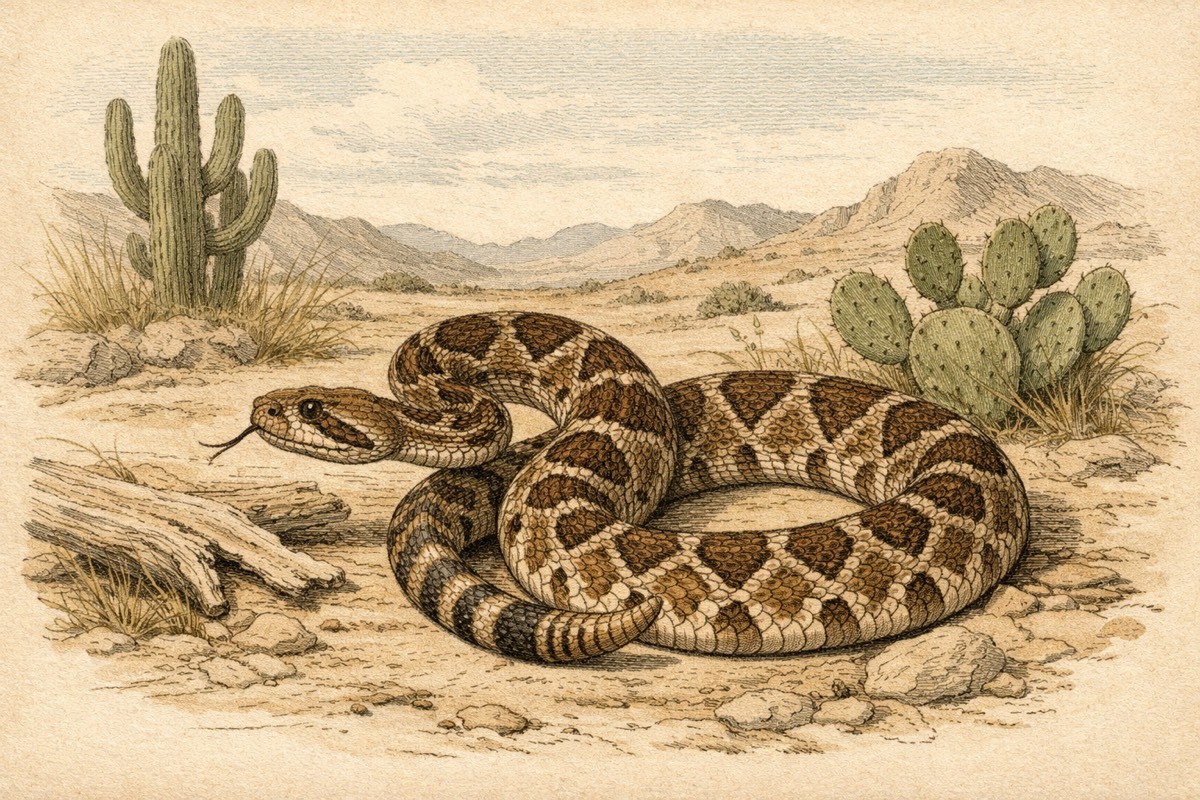
Quick Facts
| Scientific name | Suborder Serpentes |
|---|---|
| Animal type | Reptile |
| Diet | Carnivore |
| Habitat | Forests, grasslands, deserts, wetlands, mountains, and oceans depending on species |
| Lifespan | Varies widely by species |
| Weight | Varies from tiny species to very large constrictors |
| Length or height | From under 15 cm to more than 6 meters depending on species |
| Top speed | Usually moderate, with some species moving quickly in short bursts |
| Conservation status | Varies by species |
Field Notes
60 notes and observations for quick reference.
- Scientifically, snakes are placed under Suborder Serpentes.
- They belong to the reptile group.
- Their diet can be described as carnivore.
- They are most closely associated with forests, grasslands, deserts, wetlands, mountains, and oceans depending on species.
- Lifespan varies widely by species.
- Adult weight is varies from tiny species to very large constrictors.
- Body size ranges from under 15 cm to more than 6 meters depending on species.
- Movement is usually usually moderate, with some species moving quickly in short bursts.
- Their conservation status is currently listed as varies by species.
- Snakes occur on every continent except Antarctica and in many marine environments.
- Most snakes are solitary outside breeding or shared sheltering.
- Many are active at night or in mild temperatures, though patterns vary strongly.
- Snakes do not usually form stable social groups, though they may gather in shelters.
- Young snakes are often called hatchlings or neonates.
- Some snakes lay eggs, while others give birth to live young.
- Snakes move by coordinated muscular waves and contact with the ground or water.
- Feeding strategies include ambush, active searching, constriction, and venom use.
- Rodents, birds, eggs, frogs, fish, insects, or other reptiles may be eaten depending on species.
- Chemical sensing through the tongue and Jacobson's organ is especially important.
- Snakes rely more on scent, posture, and vibration than on sound-based communication.
- Camouflage, escape, bluff displays, venom, constriction, or tail vibration may be used in defense.
- A flexible skull and elongated body let snakes move and feed in ways limbed animals cannot.
- Snakes depend on habitat quality, food supply, and safe breeding conditions to keep populations stable.
- Climate, food supply, and safe habitat all shape how successfully snakes can survive and reproduce.
- Snakes help control prey populations and serve as prey themselves for larger animals.
- Habitat loss, persecution, road mortality, and illegal collection threaten many species.
- Different snake species occupy climates from deserts to rainforests to oceans.
- Snakes have no external limbs, but many still retain tiny vestiges of hind limbs internally or in relatives.
- Scales help protect the body and reduce water loss.
- The lower jaws are joined flexibly, allowing very large meals relative to head size.
- Eye coverings are transparent scales rather than movable eyelids.
- Body shape varies between burrowing, climbing, aquatic, and heavy-bodied species.
- Snakes can live in tree canopies, underground burrows, river margins, and deserts.
- Temperature strongly shapes where and when snakes are active.
- Shelter sites are vital for avoiding heat, cold, and predators.
- Wetlands are especially important for species that feed on fish or amphibians.
- Many snakes bask to raise body temperature before becoming active.
- Some species remain hidden and rely almost entirely on camouflage.
- Others actively patrol for prey and mates using scent trails.
- Seasonal dormancy helps snakes survive cold or dry conditions.
- Shared hibernation sites can contain many individuals in some species.
- Most snakes swallow prey whole rather than chewing it.
- Venomous snakes use toxins mainly to subdue prey, though venom can also defend against threats.
- Constrictors kill by cutting off circulation and breathing through pressure.
- After a large meal, a snake may not need to feed again for a long time.
- Egg-laying species often choose warm, protected sites for development.
- Live-bearing species can give birth in cooler regions where eggs would develop poorly outside the body.
- Young snakes are usually independent from the moment they hatch or are born.
- Growth often continues through repeated shedding of the skin.
- Because many snakes are secretive, local declines can go unnoticed for a long time.
- Roads can be major threats where snakes bask on warm surfaces.
- Educating people about snake behavior can reduce unnecessary killing.
- Healthy snake populations are signs of intact prey communities and shelter habitat.
- A flicking tongue helps collect scent particles from the air and ground.
- Some snakes can glide between trees or swim across open water.
- Heat-sensing pits allow certain species to detect warm-blooded prey.
- Shedding leaves behind a near-complete skin in many species.
- Not all snakes are venomous, and even venomous species vary greatly in danger to humans.
- A snake's movement may look simple, but it depends on finely coordinated muscles and scales.
- Snakes show how body design can be completely reworked for stealth and flexibility.
Habitat and Range
Snakes are linked to forests, grasslands, deserts, wetlands, mountains, and oceans depending on species. Snakes occur on every continent except Antarctica and in many marine environments. Snakes can live in tree canopies, underground burrows, river margins, and deserts. Temperature strongly shapes where and when snakes are active.
Behavior and Lifestyle
Most snakes are solitary outside breeding or shared sheltering. Many are active at night or in mild temperatures, though patterns vary strongly. Many snakes bask to raise body temperature before becoming active. Some species remain hidden and rely almost entirely on camouflage.
Diet and Feeding
Their diet is carnivore. Feeding strategies include ambush, active searching, constriction, and venom use. Rodents, birds, eggs, frogs, fish, insects, or other reptiles may be eaten depending on species. Most snakes swallow prey whole rather than chewing it.
Conservation and Adaptations
A flexible skull and elongated body let snakes move and feed in ways limbed animals cannot. Habitat loss, persecution, road mortality, and illegal collection threaten many species. Because many snakes are secretive, local declines can go unnoticed for a long time. Snakes help control prey populations and serve as prey themselves for larger animals.