
Dolphin
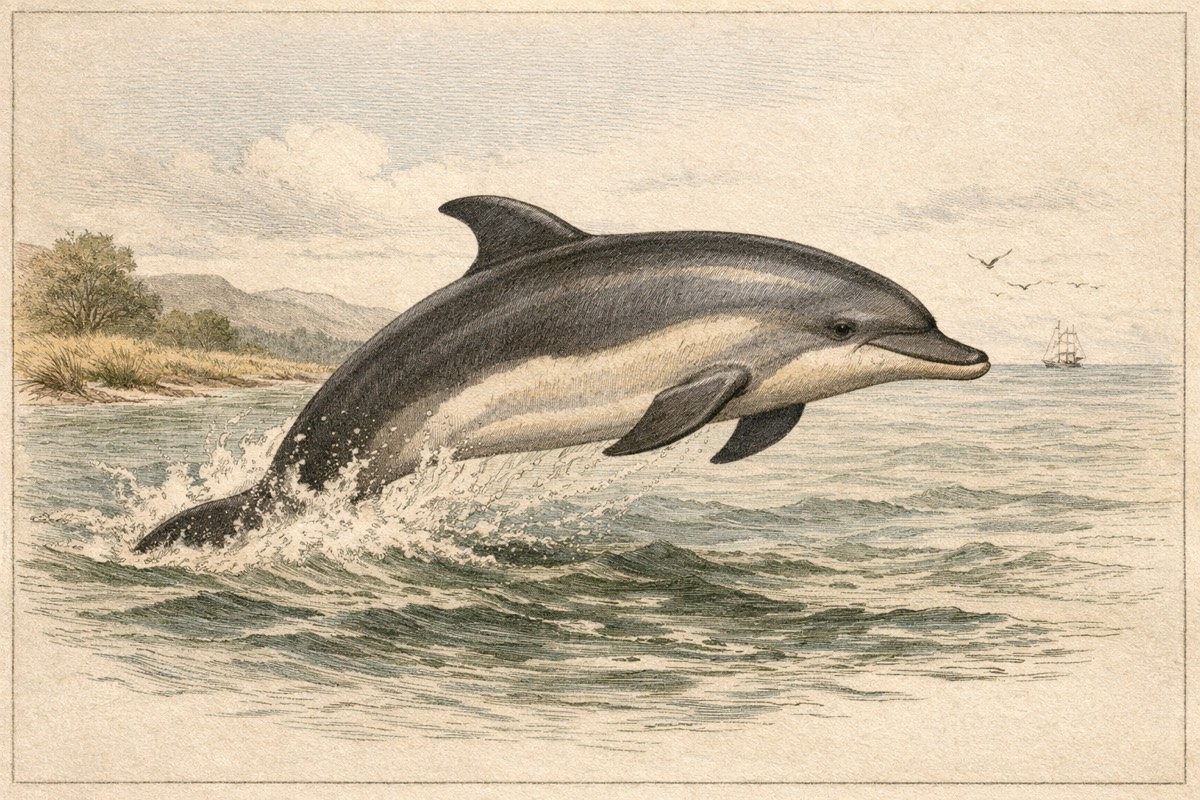
Dolphins are intelligent marine mammals known for echolocation, social groups, fast swimming, and playful surface behavior.
Dolphins live in oceans, coastal waters, estuaries, and some rivers depending on species. Dolphins live in oceans worldwide, and some species also inhabit rivers. Echolocation lets dolphins interpret objects and prey through reflected sound. Dolphins are active predators in marine food webs and indicators of ocean health.
Many dolphins live in pods with changing group size and membership. They are active day and night because movement, breathing, and social interaction continue constantly. Bycatch, pollution, ship traffic, noise, and habitat degradation threaten many species.
Quick Facts
| Scientific name | Family Delphinidae and related dolphin groups |
|---|---|
| Animal type | Marine mammal |
| Diet | Carnivore |
| Habitat | Oceans, coastal waters, estuaries, and some rivers depending on species |
| Lifespan | Often 20 to 40 years depending on species |
| Weight | About 40 to more than 500 kg depending on species |
| Length or height | Roughly 1.5 to 4 meters long |
| Top speed | Up to 55 km/h |
| Conservation status | Varies by species |
Field Notes
60 notes and observations for quick reference.
- Scientifically, dolphins are placed under Family Delphinidae and related dolphin groups.
- They belong to the marine mammal group.
- Their diet can be described as carnivore.
- They are most closely associated with oceans, coastal waters, estuaries, and some rivers depending on species.
- Life span is often 20 to 40 years depending on species.
- Adults commonly weigh about 40 to more than 500 kg depending on species.
- Typical size is roughly 1.5 to 4 meters long.
- Top speed can reach up to 55 km/h.
- Their conservation status is currently listed as varies by species.
- Dolphins live in oceans worldwide, and some species also inhabit rivers.
- Many dolphins live in pods with changing group size and membership.
- They are active day and night because movement, breathing, and social interaction continue constantly.
- A group of dolphins is called a pod.
- Young dolphins are called calves.
- Dolphins usually give birth to one calf and invest heavily in parental care.
- A streamlined body and powerful tail flukes make dolphins efficient swimmers.
- They may hunt alone or cooperatively depending on prey type and habitat.
- Fish, squid, and other small marine animals are common foods.
- Echolocation and hearing are crucial for navigation and hunting underwater.
- Whistles, clicks, body contact, and leaps all form part of dolphin communication.
- Speed, social cooperation, and awareness of the surroundings help dolphins avoid danger.
- Echolocation lets dolphins interpret objects and prey through reflected sound.
- Dolphins depend on habitat quality, food supply, and safe breeding conditions to keep populations stable.
- Climate, food supply, and safe habitat all shape how successfully dolphins can survive and reproduce.
- Dolphins are active predators in marine food webs and indicators of ocean health.
- Bycatch, pollution, ship traffic, noise, and habitat degradation threaten many species.
- Different species occupy warm tropical seas, temperate coasts, or even colder waters.
- Dolphins breathe air through a blowhole on top of the head.
- Their skin is smooth and shaped to reduce drag in water.
- The dorsal fin helps with stability while swimming.
- Tail flukes move up and down, unlike fish tails that usually move side to side.
- Dolphins have a thick layer of blubber that helps with insulation and energy storage.
- Coastal dolphins often use shallow bays and estuaries where fish are abundant.
- Offshore species may roam far from land in deep pelagic waters.
- River dolphins show that not all dolphins are strictly ocean animals.
- Water quality and prey availability strongly influence dolphin distribution.
- Dolphins often surface in rhythm with breathing and travel movement.
- Many species use cooperative hunting strategies that herd fish into tight groups.
- Calves stay close to their mothers and learn social behavior from the pod.
- Dolphins may leap clear of the water while traveling or socializing.
- Some dolphins show strong local traditions in feeding behavior.
- Prey choice varies by species, region, and depth.
- Echolocation helps dolphins track prey even in murky or dark water.
- They may use bubbles, mud rings, or coordinated movement to trap fish.
- Fast prey requires quick turning, acceleration, and close teamwork in some hunts.
- Calves nurse underwater and remain close to the mother for a long time.
- Young dolphins learn routes, sounds, and hunting behavior socially.
- Breeding rates are relatively slow compared with many fish species.
- A long life span means that individuals can build complex social histories.
- Dolphins are vulnerable to accidental capture in fishing gear.
- Chemical pollution can build up in the bodies of long-lived marine mammals.
- Reducing underwater noise matters because sound is central to dolphin life.
- Protected coastal habitat helps dolphins and many fish species at the same time.
- Some dolphins use tools, such as marine sponges, in specific populations.
- Each dolphin whistle pattern may carry individual information.
- Dolphins sleep by resting one half of the brain at a time.
- They can ride pressure waves created by boats or breaking surf.
- Pod structure can change quickly as animals join or leave temporarily.
- Dolphins are mammals, so they must surface to breathe throughout life.
- Their intelligence is often most visible in social learning and problem-solving.
Habitat and Range
Dolphins are linked to oceans, coastal waters, estuaries, and some rivers depending on species. Dolphins live in oceans worldwide, and some species also inhabit rivers. Coastal dolphins often use shallow bays and estuaries where fish are abundant. Offshore species may roam far from land in deep pelagic waters.
Behavior and Lifestyle
Many dolphins live in pods with changing group size and membership. They are active day and night because movement, breathing, and social interaction continue constantly. Dolphins often surface in rhythm with breathing and travel movement. Many species use cooperative hunting strategies that herd fish into tight groups.
Diet and Feeding
Their diet is carnivore. They may hunt alone or cooperatively depending on prey type and habitat. Fish, squid, and other small marine animals are common foods. Prey choice varies by species, region, and depth.
Conservation and Adaptations
Echolocation lets dolphins interpret objects and prey through reflected sound. Bycatch, pollution, ship traffic, noise, and habitat degradation threaten many species. Dolphins are vulnerable to accidental capture in fishing gear. Dolphins are active predators in marine food webs and indicators of ocean health.