
Peacock
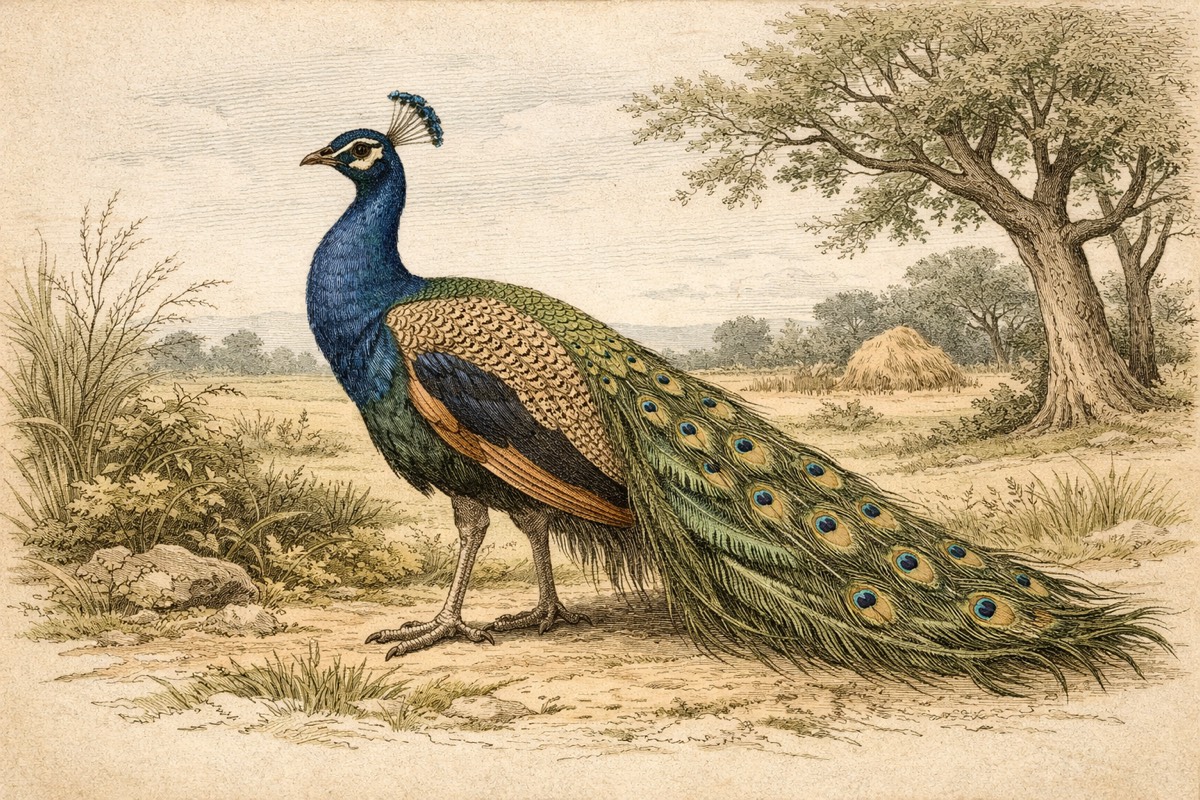
Peacocks are male peafowl famous for their iridescent display train, loud calls, and striking courtship behavior.
Peacocks live in forests, scrublands, farmland edges, and open woodland. The Indian peafowl is native to South Asia and has been introduced elsewhere. The male's display train is a sexual selection adaptation rather than a survival one. Peafowl eat insects and seeds and form part of forest-edge food webs.
Peafowl are usually seen in loose groups, especially around feeding or roosting sites. They are mostly active during the day. Habitat pressure and local hunting can affect populations, though the species is widespread.
Quick Facts
| Scientific name | Pavo cristatus and related peafowl |
|---|---|
| Animal type | Bird |
| Diet | Omnivore |
| Habitat | Forests, scrublands, farmland edges, and open woodland |
| Lifespan | Often 10 to 20 years |
| Weight | About 4 to 6 kg in adult males |
| Length or height | Body length over 1 meter, with display train much longer in males |
| Top speed | Strong short flight and fast running when alarmed |
| Conservation status | Least Concern for the Indian peafowl |
Field Notes
60 notes and observations for quick reference.
- Scientifically, peacocks are placed under Pavo cristatus and related peafowl.
- They belong to the bird group.
- Their diet can be described as omnivore.
- They are most closely associated with forests, scrublands, farmland edges, and open woodland.
- Life span is often 10 to 20 years.
- Adults commonly weigh about 4 to 6 kg in adult males.
- Typical size is body length over 1 meter, with display train much longer in males.
- Movement is usually strong short flight and fast running when alarmed.
- Their conservation status is currently listed as least concern for the indian peafowl.
- The Indian peafowl is native to South Asia and has been introduced elsewhere.
- Peafowl are usually seen in loose groups, especially around feeding or roosting sites.
- They are mostly active during the day.
- A group of peafowl may be called a muster or ostentation.
- Young peafowl are called peachicks.
- Females nest on the ground and raise chicks after the male's courtship display.
- Peafowl walk and run well on the ground but can also fly up to roost.
- They forage by walking, pecking, scratching, and scanning for small food items.
- Seeds, shoots, insects, fruit, and small animals can all be eaten.
- Vision is important for display and vigilance in open areas.
- Loud calls, display postures, and body movements are central to communication.
- Alertness, quick running, flight to roosts, and group vigilance help keep peafowl safe.
- The male's display train is a sexual selection adaptation rather than a survival one.
- Peacocks depend on habitat quality, food supply, and safe breeding conditions to keep populations stable.
- Climate, food supply, and safe habitat all shape how successfully peacocks can survive and reproduce.
- Peafowl eat insects and seeds and form part of forest-edge food webs.
- Habitat pressure and local hunting can affect populations, though the species is widespread.
- Warm habitats with trees for roosting and open ground for foraging suit peafowl well.
- The peacock's famous train is made of elongated upper tail coverts, not the main tail feathers.
- Iridescent color comes from feather structure as much as from pigment.
- A crest of feathers sits on top of the head.
- Males are usually much more brightly colored than females.
- Strong legs help peafowl move effectively on the ground.
- Peafowl often prefer places with both open feeding ground and nearby cover.
- Trees are important because they provide safe night roosts.
- Forest edges and farmland mosaics can support peafowl well.
- Ground nests need concealed vegetation to reduce predation risk.
- Courtship displays involve fanning the train and vibrating it in front of females.
- Peafowl regularly give loud calls, especially when alarmed.
- Males may display in small territories during the breeding season.
- Chicks follow the female soon after hatching.
- Roosting high above the ground reduces danger from many predators.
- Their diet is flexible enough to include both plant material and small animals.
- Insects are important especially during times of growth or breeding.
- Peafowl often forage slowly while staying alert to the surroundings.
- Human-modified landscapes can provide food, but they may also increase risk.
- Eggs and chicks are vulnerable because nests are placed on the ground.
- Young birds gradually develop adult plumage over time.
- Only adult males carry the full display train.
- Females do most of the direct care for chicks.
- Widespread peafowl still depend on intact nesting cover and safe roost sites.
- Protecting forest edges and reducing hunting pressure helps local populations remain healthy.
- Cultural value has helped protect peafowl in some regions.
- Peafowl can adapt to people, but repeated disturbance still affects breeding behavior.
- A peacock display can shimmer because tiny feather structures reflect light differently with movement.
- The train is shed and regrown over the annual cycle.
- Loud calls can travel far and make peafowl easier to hear than to see.
- The female is called a peahen, while the species as a whole is peafowl.
- Even a bird famous for beauty still spends much of its day simply walking and feeding.
- Display feathers can look very different depending on angle and sunlight.
- Peafowl show how sexual selection can shape some of the most dramatic traits in nature.
Habitat and Range
Peacocks are linked to forests, scrublands, farmland edges, and open woodland. The Indian peafowl is native to South Asia and has been introduced elsewhere. Peafowl often prefer places with both open feeding ground and nearby cover. Trees are important because they provide safe night roosts.
Behavior and Lifestyle
Peafowl are usually seen in loose groups, especially around feeding or roosting sites. They are mostly active during the day. Courtship displays involve fanning the train and vibrating it in front of females. Peafowl regularly give loud calls, especially when alarmed.
Diet and Feeding
Their diet is omnivore. They forage by walking, pecking, scratching, and scanning for small food items. Seeds, shoots, insects, fruit, and small animals can all be eaten. Their diet is flexible enough to include both plant material and small animals.
Conservation and Adaptations
The male's display train is a sexual selection adaptation rather than a survival one. Habitat pressure and local hunting can affect populations, though the species is widespread. Widespread peafowl still depend on intact nesting cover and safe roost sites. Peafowl eat insects and seeds and form part of forest-edge food webs.